Your Kitchener Basement Could Be a Legal Suite (Here’s How to Design It Right)
Transform your basement into a legal rental suite by starting with the egress window requirement. Install a window that opens to at least 3.8 square feet with a minimum width of 15 inches, positioned no higher than 3 feet 7 inches from the floor. This isn’t just about code compliance. The right window placement floods your space with natural light and makes a below-grade suite feel open and inviting.
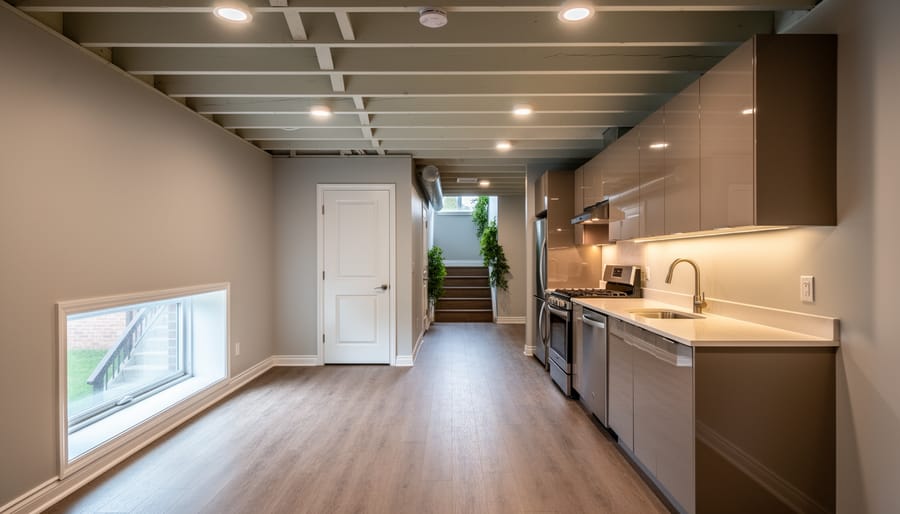
Plan your ceiling height strategically around the 6-foot-7-inch minimum requirement. If you’re working with a lower ceiling, consider lowering the floor in specific areas or creating interesting design features that draw the eye horizontally rather than vertically. Exposed painted joists in a modern color can actually become a design feature while maximizing every inch of headroom.
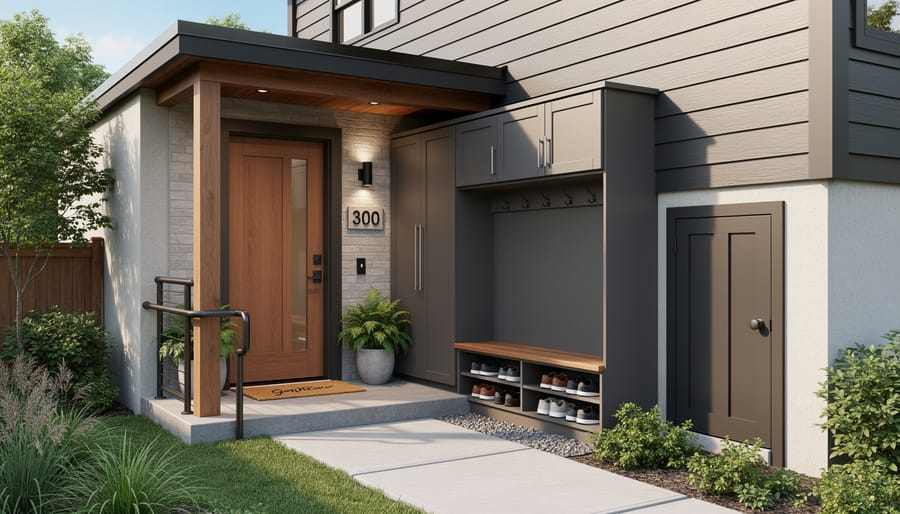
Create a completely separate entrance from your main home. This legal requirement becomes a design opportunity when you think beyond basic functionality. A well-lit exterior stairwell with attractive railings and plantings makes tenants feel they have their own private home, not just a basement apartment.
Install a proper kitchen that meets fire safety codes with heat and smoke detectors positioned correctly. Use this as a chance to design an efficient galley or L-shaped layout that maximizes your limited square footage. Smart cabinetry choices and reflective surfaces make compact kitchens feel surprisingly spacious.
Working with an experienced basement renovation team in Kitchener helps you balance these legal requirements with beautiful design from the start, saving you costly revisions and creating a suite that tenants love.
Why Legal Compliance and Design Go Hand-in-Hand
Here’s a perspective shift that might surprise you: those legal requirements for your Kitchener basement suite? They’re actually your design roadmap, not roadblocks.
Think about it. The City of Kitchener requires egress windows for safety, and yes, you need proper ceiling heights and separate entrances. But these aren’t arbitrary hoops to jump through. They’re guidelines that, when approached thoughtfully, create spaces that feel open, bright, and genuinely welcoming.
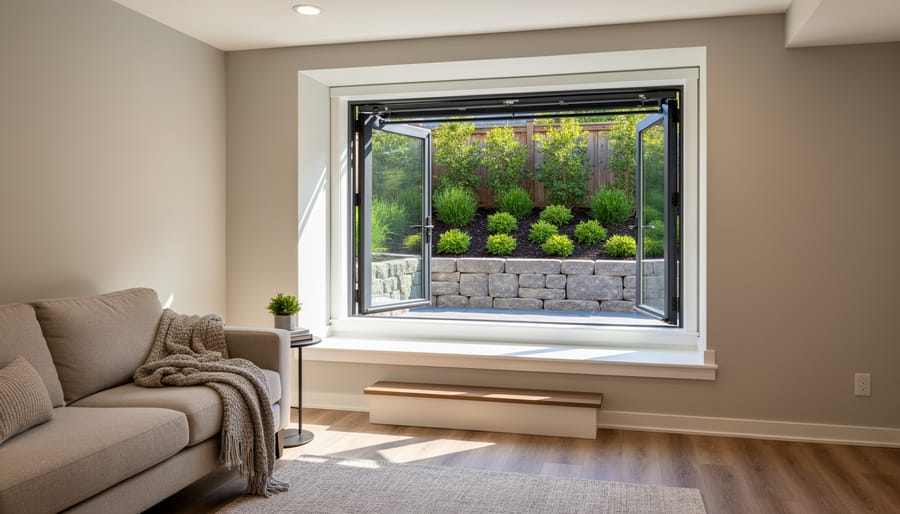
Take egress windows as an example. Sure, you could see them as a mandate you have to squeeze in somehow. Or you can recognize that bringing in natural light and proper ventilation transforms a basement from a dark afterthought into a space people actually want to live in. Those larger window openings? They’re your chance to add window seats, frame beautiful views, or create cozy reading nooks that flood with afternoon sun.
The required ceiling height standards ensure your tenants won’t feel like they’re living in a cave. That separate entrance requirement creates privacy for both you and your tenants while adding architectural interest to your home’s exterior.
Here’s the thing: smart design doesn’t fight against building codes. It embraces them. Every legal requirement exists because it makes the space safer and more livable. Your job isn’t to work around these standards but to weave them into a cohesive design that feels intentional and beautiful. The best basement suites are the ones where you can’t tell what was required by law and what was pure creative choice, because everything just works together naturally.
Planning Your Layout Around Legal Requirements
Working with Ceiling Heights and Sightlines
Let me be honest with you: legal basement ceiling heights in Kitchener don’t exactly scream “spacious penthouse loft.” But here’s the good news. You absolutely can create a basement suite that feels open and airy, even with those code-required minimums. It’s all about working smart with the space you have.
Start with your walls and ceiling. Light, cool colors are your best friend here because they reflect light and visually expand the space. Think soft whites, pale grays, or gentle blues. Choosing paint colors specifically for lower ceilings means staying away from dark tones that can make the ceiling feel like it’s pressing down on you. And here’s a pro tip: paint your ceiling the same color as your walls, or even one shade lighter. This blurs the boundary between wall and ceiling, making the whole room feel taller.
Several design strategies can trick the eye into perceiving more height:
- Install recessed lighting to eliminate bulky fixtures that eat up visual space
- Use vertical stripes or tall, narrow artwork to draw the eye upward
- Hang curtains as close to the ceiling as possible, even if windows sit lower
- Place mirrors strategically to reflect light and create depth
- Choose low-profile furniture that doesn’t crowd the vertical space
Those pesky bulkheads and mechanical systems? Don’t try to hide them awkwardly. Instead, paint them the same color as the ceiling so they fade into the background. You can also use them as opportunities for creative lighting, running LED strips along their edges to add ambient glow that actually highlights the architecture in a modern way.
Designing Around Egress Windows
Egress windows don’t have to look like safety afterthoughts. With the right approach, these legally required features become genuine design assets that bring light and character to your basement suite.
Start with the window wells themselves. Instead of leaving bare concrete visible, consider stone veneer or decorative pavers that add texture and warmth. Paint lighter colors on well walls to maximize light reflection into your space. Some homeowners add small pebbles or river rocks at the bottom for a clean, finished look that also helps with drainage.
Inside, dress these windows to enhance rather than hide them. Light, airy curtains in sheer fabrics let natural light flow while providing privacy. Avoid heavy drapes that block precious sunlight. Roman shades work beautifully because you can adjust them throughout the day, and they have a tailored look that feels intentional.
Furniture placement makes all the difference. Position your seating to face the window or angle pieces to catch that natural light. A cozy reading chair beside an egress window transforms a safety requirement into the suite’s best feature. Low-profile furniture near windows keeps sightlines open and prevents the space from feeling cramped.
Think about adding plants on the windowsill or just beside it. Greenery thrives in natural light and softens the industrial feel that basement windows sometimes have. Choose varieties that do well in moderate light conditions.
If your egress window sits lower on the wall, embrace it. Create a window seat with storage underneath, or use the sill as a display shelf for books and decorative objects. The goal is making visitors think you chose that window placement for its charm, not because the building code required it.
Creating a Separate Entrance That Feels Welcoming
Your basement suite’s entrance sets the entire tone for the space, and getting it right means balancing privacy with a genuine sense of welcome. Think about what you notice first when visiting someone’s home. That same principle applies here.
Start with lighting that actually works. A well-lit entrance isn’t just about safety (though that matters for code compliance). Layer your lighting with an overhead fixture for general brightness, plus a small sconce or LED strip along the steps if applicable. Motion sensors are brilliant for basement entries since tenants often arrive with their hands full. Nobody wants to fumble for light switches with grocery bags.
Flooring transitions deserve thought. You’ll need durable materials that can handle wet boots and daily traffic. Tile or luxury vinyl at the entrance protects your floors while clearly defining the entry zone. A textured mat or small area rug adds warmth without creating trip hazards. This transition also signals “you’re home now” in a subtle but meaningful way.
Storage makes or breaks a small entrance. Even a compact entry needs somewhere for shoes, coats, and bags. Wall-mounted hooks take up zero floor space. A narrow bench with storage underneath gives tenants a place to sit while removing shoes, which many renters appreciate. Floating shelves above the bench can hold keys and mail without cluttering counters.
Paint color matters more than you’d think in tight spaces. Light, neutral tones make the area feel larger and more inviting. Add personality with your hardware choices, a small mirror to bounce light around, or even a piece of simple artwork that says “this space was designed with care.”
Choosing Materials and Finishes for Basement Conditions
Selecting the right materials for your basement suite isn’t just about looks. Below-grade spaces face unique challenges that above-ground rooms don’t deal with, particularly moisture and temperature fluctuations. The good news? You can absolutely create a stunning space that handles these conditions beautifully while meeting all code requirements.
Start with moisture-resistant materials as your foundation. Basement humidity levels run higher than the rest of your home, so materials need to withstand these conditions without warping, molding, or deteriorating. Luxury vinyl plank flooring has become incredibly popular for basement suites because it mimics hardwood perfectly while being completely waterproof. Ceramic or porcelain tile works wonderfully too, especially in kitchen and bathroom areas where codes often require water-resistant surfaces anyway.
For walls, skip traditional drywall in favor of moisture-resistant or mold-resistant drywall (often called green board or purple board). These products cost slightly more but provide essential protection in below-grade environments. Paint selection matters here too. Choose paints with mildew-resistant properties, and consider semi-gloss or satin finishes in moisture-prone areas since they’re easier to clean and more resistant to humidity damage than flat paints.
| Material Type | Best Options | Moisture Resistance | Design Appeal |
|---|---|---|---|
| Flooring | Luxury vinyl plank, ceramic tile, polished concrete | Excellent | Wide style variety, modern aesthetics |
| Wall Finishes | Moisture-resistant drywall with mildew-resistant paint | Very Good | Unlimited color options, clean look |
| Ceiling Options | Suspended ceiling tiles, moisture-resistant drywall | Good to Excellent | Accessible utilities or seamless finish |
Ceiling choices often depend on your mechanical systems. Suspended ceiling tiles offer easy access to plumbing and electrical while still looking polished. If your ceiling height allows and utilities are neatly arranged, drywalled ceilings create a more finished, residential feel.
Remember that durability and beauty go hand in hand in basement suites. Materials that resist moisture naturally last longer and maintain their appearance, which means your design stays fresh for years to come.
Lighting Design That Makes Basements Feel Bright
Good lighting transforms a basement suite from a dim afterthought into a welcoming space you’ll actually want to spend time in. Since natural light is scarce below grade, your lighting strategy needs to work harder and smarter. The good news? Creating a bright, inviting basement is absolutely achievable with the right layered approach.
Start with ambient lighting that mimics natural daylight. Recessed LED pot lights are your foundation here, and they’re required by Ontario electrical code to meet specific foot-candle requirements in living spaces. Position them strategically across the ceiling in a grid pattern rather than lining them up in straight rows. This creates more even light distribution and eliminates those harsh shadows that make basements feel cave-like. Choose bulbs with a color temperature between 3000K and 4000K. Too warm feels dim, too cool feels clinical.
Task lighting comes next. This is where you address specific activities: pendant lights over kitchen counters, under-cabinet strips for food prep, reading lamps beside seating areas. Don’t skimp here. Basement light needs to be intentional about where you’ll actually be doing things.
Accent lighting adds personality and depth. Picture lights, LED strips behind floating shelves, or wall sconces create visual interest and draw the eye around the room. This layering tricks your brain into perceiving more space and brightness than actually exists.
One practical tip: install dimmer switches wherever possible. They give you flexibility to adjust lighting intensity throughout the day and help create cozy evenings without sacrificing brightness when you need it. Since you’re already running electrical work to meet code requirements for bedroom egress lighting and hallway illumination, adding dimmers is a simple upgrade that makes a real difference in how the space feels.
Kitchen and Bathroom Design for Legal Suites
Compact Kitchen Solutions That Don’t Feel Cramped
A legally compliant basement suite kitchen needs to include specific elements like a sink, cooking surface, and refrigerator, but that doesn’t mean you’re stuck with a cramped, awkward space. The secret? Thinking vertically and making every inch count.
Start by choosing apartment-sized appliances that are built for smaller footprints but don’t skimp on functionality. An 18-inch dishwasher fits almost anywhere, and slim refrigerators around 24 inches wide still offer plenty of storage. For cooking, consider a combination microwave-convection oven mounted above a two-burner cooktop. This setup meets code requirements while freeing up precious counter space.
Storage is where small kitchens really succeed or fail. Install cabinets that reach the ceiling to maximize vertical space, even if you need a step stool for the top shelves. Pull-out organizers, corner carousels, and drawer dividers transform awkward spaces into highly functional storage. A magnetic knife strip and wall-mounted spice racks keep counters clear while adding visual interest.
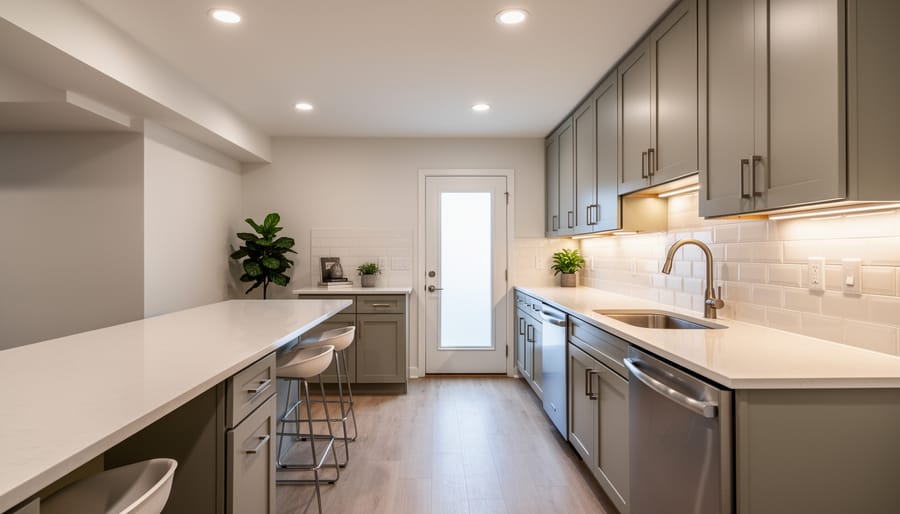
Light colors make a massive difference in how spacious a kitchen feels. White or light gray cabinetry paired with a pale backsplash reflects light and opens up the room. Under-cabinet lighting eliminates shadows and makes the space feel larger. If you can add a window or even a glass-panel door, natural light becomes your best design tool.
For counter space, consider a narrow peninsula or fold-down table that serves double duty as prep area and dining spot. Every surface should work hard in a compact kitchen, but with smart choices, you’ll create a space that feels surprisingly generous.
Bathroom Layout and Style
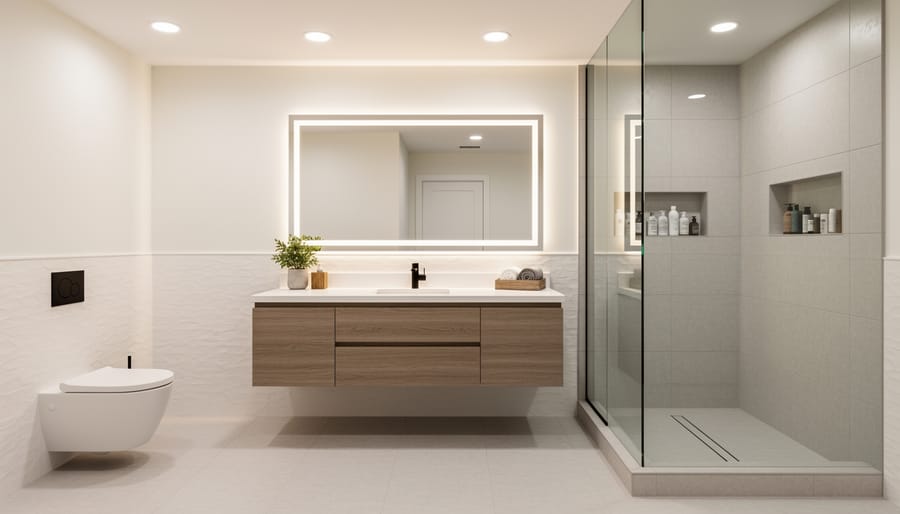
Designing a basement suite bathroom means balancing tight quarters with big expectations. The good news? Smart bathroom design choices can make even a compact space feel surprisingly roomy while ticking every compliance box.
Start with fixture selection. A corner shower with clear glass doors opens up sightlines and prevents that cramped feeling. Wall-mounted toilets and floating vanities create visual space by exposing more floor. Choose a pedestal sink if you’re really tight on square footage, though a slim vanity with drawers underneath gives you precious storage without eating up room.
Speaking of storage, think vertically. Recessed medicine cabinets, floating shelves above the toilet, and shower niches keep essentials accessible without cluttering counters. Tenants will appreciate thoughtful touches like towel hooks on the back of the door and a compact linen cabinet.
Ventilation isn’t optional in legal basement suites. You’ll need a properly vented exhaust fan, but that doesn’t mean an ugly ceiling grille has to dominate the view. Modern low-profile fans blend into your design, and some include integrated lighting to reduce ceiling clutter.
For finishes, moisture resistance is non-negotiable. Large-format tiles minimize grout lines and make the space feel bigger. Light colours reflect available light beautifully. Consider tile that runs from floor to ceiling in the shower area for a cohesive, spa-like effect that also simplifies waterproofing. Luxury vinyl plank flooring outside the wet zone offers warmth underfoot while standing up to humidity perfectly.
Storage Solutions That Maximize Space
When you’re working with a basement suite, storage can make or break the entire space. The good news? Smart storage solutions can actually help you meet legal requirements while keeping your suite feeling spacious and welcoming.
Built-in storage is your best friend in a basement suite. Consider floor-to-ceiling shelving units that draw the eye upward and make the most of vertical space. Murphy beds with integrated shelving systems work beautifully in studio-style suites, giving you a comfortable sleeping area that disappears during the day. Window seats with lift-up storage underneath serve double duty, providing both seating and hidden storage while staying clear of egress requirements around those crucial basement windows.
Furniture selection matters more in smaller spaces. Look for pieces that offer hidden storage, like ottomans with removable tops, coffee tables with drawers, or bed frames with built-in drawers. A dining table with leaves that fold down can give you flexibility without eating up precious floor space.
Now, let’s talk about those mechanical systems and utility areas. They’re necessary, but they don’t need to be eyesores. If your furnace or water heater is visible in the living space, consider creating a decorative screen using lattice panels or even a stylish room divider. You can paint exposed ductwork the same color as your ceiling to make it visually recede. Some clients love the industrial look and choose to highlight these features with contrasting paint colors.
Organizational systems like track shelving, pegboards, and modular closet systems help renters customize their storage without permanent modifications. These solutions respect lease agreements while giving tenants control over their space. Virtual design consultations can help you visualize exactly where storage should go to maximize both function and flow.
Color and Style Choices That Open Up the Space
Here’s the thing about basement suites: they already face an uphill battle with natural light and ceiling height. Your color and style choices can either work with you or against you in making the space feel welcoming.
Light colors are your best friend here. Soft whites, warm creams, and pale grays reflect whatever light you do have, bouncing it around the room instead of absorbing it. Think about painting your ceilings a shade lighter than your walls to create the illusion of height. I’ve seen Kitchener basement suites gain incredible visual height just from this simple trick.
But all-white doesn’t mean boring. You can add personality through texture and carefully chosen accent colors. A sage green accent wall or warm terracotta pillows add character without closing in the space. Just keep darker, saturated colors for smaller doses like artwork or accessories.
Patterns need a thoughtful approach too. Vertical stripes on curtains or wallpaper can draw the eye upward, while small-scale patterns prevent visual overwhelm in compact rooms. Large, busy patterns tend to make spaces feel cramped, so save those for throw pillows where you can easily swap them out.
When styling small spaceschoose furniture with legs rather than pieces that sit flush to the floor. This creates visual airiness and makes rooms feel less heavy. Glass or lucite coffee tables practically disappear, giving you function without bulk.
Mirrors deserve special mention. Strategically placed opposite windows or light sources, they double your light and create depth. A large mirror can genuinely transform how spacious your suite feels.
How Virtual Design Services Make This Process Easier
Trying to balance legal requirements with your design vision can feel overwhelming, but that’s exactly where virtual design services shine. When you work with an experienced online designer, you get someone who understands both the code requirements for Kitchener basement suites and how to create spaces that actually feel inviting and beautiful. The online design process lets you tap into professional expertise without the traditional designer price tag.
One of the biggest advantages? 3D renderings that let you see exactly how your basement suite will look before you commit to construction or finalize material choices. Visualizing the space in three dimensions helps you spot potential issues early, whether that’s furniture placement around those required egress windows or ensuring your lighting plan creates the right ambiance while meeting code minimums.
Virtual designers can also guide you toward materials and finishes that work within code requirements while matching your personal style. Need flooring that meets moisture resistance standards but doesn’t look institutional? Your designer knows exactly what to recommend. Want to ensure your ceiling treatment won’t cause headaches with height restrictions? They’ll help you find creative solutions that keep inspectors happy and renters impressed.
Creating a legal basement suite in Kitchener doesn’t mean choosing between compliance and beauty. You can absolutely have both. The best part? Many of the code requirements we’ve discussed actually make your space more comfortable and inviting. Those egress windows bring in natural light. Proper ceiling heights create an open, airy feel. Good ventilation keeps everything fresh.
Your basement suite can be a space you’re genuinely proud of, one that attracts quality tenants or provides a welcoming home for family. It starts with understanding what’s required and then finding creative ways to meet those standards while expressing your style.
Yes, there are rules to follow. But think of them as a framework that protects your investment and keeps everyone safe. Within that framework, you have so much room to design something special. The right lighting choices, a smart layout, beautiful finishes that fit your budget, these all come together to transform a basement into a real home.
If you’re feeling overwhelmed by where to start or how to balance all these considerations, you don’t have to figure it out alone. Working with someone who understands both design and local requirements can save you time, money, and stress. A designer can help you make choices that work practically while still looking fantastic.
Your Kitchener basement has real potential. With thoughtful planning and the right support, you can create a legal suite that’s genuinely beautiful and valuable for years to come.
Leave a Reply