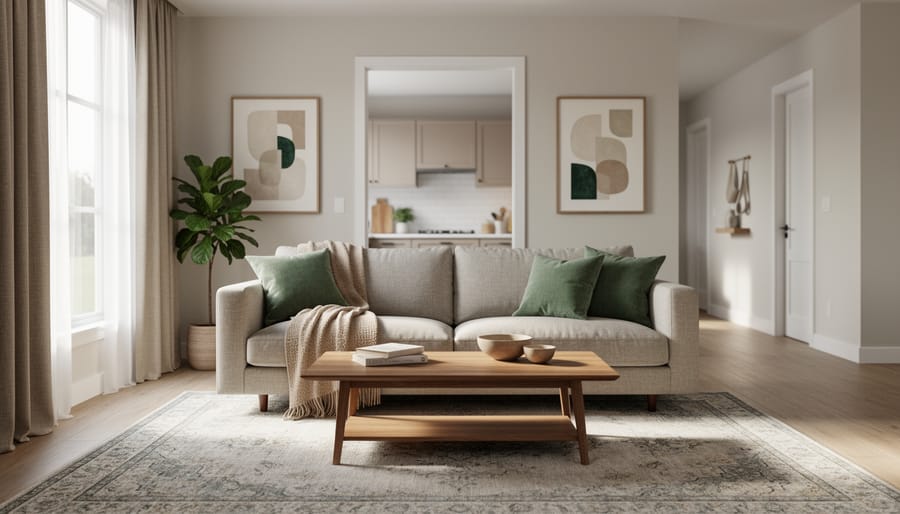
What Is Seamless Design (and How Does It Work in Your Home)?
Seamless design is an interior approach that creates visual flow and cohesion across every element in a room, so the space feels unified rather than pieced together from random purchases. Instead of relying on guesswork or hoping that disparate furniture and decor will magically work together, this method brings color palettes, textures, materials, and styles into deliberate harmony. The result? A home that looks professionally curated and feels effortlessly comfortable, without the usual stress of wondering what goes where or whether that rug actually clashes with your sofa.
For homeowners trying to transform their spaces, the challenge isn’t just picking beautiful things. It’s making sure those beautiful things belong in the same room. That’s where the design process matters as much as the outcome. Our seamless online design process eliminates the traditional friction of in-person consultations, endless showroom trips, and second-guessing your choices at 2 a.m. By working virtually, you get personalized guidance that connects every design decision to a clear, cohesive vision.
This article breaks down what seamless design truly means in practice: how the process works from concept to installation, the types of design elements that need to align, and real-world applications that show how cohesive interiors come together in actual homes. Whether you’re starting with blank walls or reworking a space that never quite clicked, understanding these principles gives you a roadmap to rooms that finally feel finished.
What Is Seamless Design?
Seamless design refers to an interior design approach where spaces flow together naturally, creating a cohesive visual experience throughout your home. Rather than treating each room as an isolated project, this philosophy views your entire living space as a connected story where colors, materials, styles, and transitions work in harmony.
The aesthetic dimension focuses on eliminating jarring visual breaks. When you walk from your living room into the kitchen, seamless design ensures nothing feels abrupt or disconnected. Your eyes move comfortably between spaces because the designer has carefully considered how each area relates to the next, creating what feels like one intentional environment rather than a collection of separate rooms.
Understanding the core concepts helps clarify what makes design truly seamless:
- Visual Flow
- The smooth, natural progression your eyes follow when moving through connected spaces, achieved through repeated colors, complementary styles, or aligned sightlines.
- Cohesion
- The quality of feeling unified and intentional across your home, where design choices clearly belong to the same overall vision rather than competing aesthetics.
- Transition Points
- The physical thresholds between rooms, doorways, hallways, archways, where seamless design prevents style clashes through thoughtful material and color continuity.
- Design Continuity
- The deliberate repetition of certain elements throughout your home that creates recognizable threads connecting different spaces without making everything identical.
Equally important is the process dimension. Seamless design also describes a friction-free design experience where homeowners collaborate with designers through clear communication, streamlined decision-making, and tools that make envisioning the final result straightforward. This approach eliminates the typical stress, confusion, and miscommunication that plague traditional design projects, replacing them with a smooth journey from initial concept to completed space.
How Seamless Design Works
The Planning Phase
The planning phase sets the foundation for a cohesive home that truly reflects how you live. Rather than jumping straight to furniture shopping, designers begin by gathering information about your daily routines, aesthetic preferences, and practical challenges, details that prevent style clashes later.
During virtual consultations, your designer asks targeted questions: Do you entertain frequently? Which rooms feel most uncomfortable now? What colors make you feel at home? These conversations reveal patterns that shape the entire design direction, ensuring every choice serves a purpose beyond looking pretty.
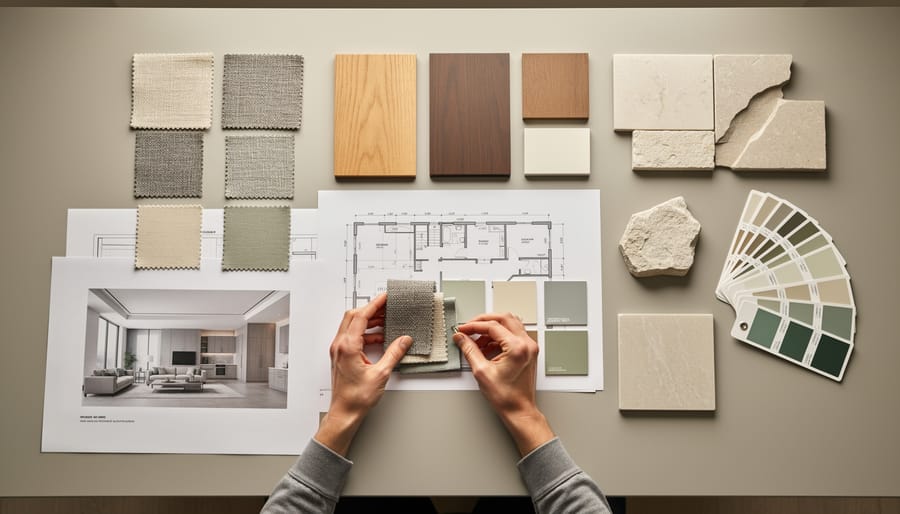
Mood boards become your visual roadmap, pulling together paint swatches, fabric samples, and inspiration images into a unified palette. When created thoughtfully, these boards show you exactly how different elements will work together across your home, eliminating the guesswork that leads to disconnected rooms. You’ll see your vision materialize from blank walls to dream space before any purchases happen.
The lifestyle assessment digs deeper than style preferences alone. A family with young children needs durable, washable fabrics and open sightlines. Someone working from home requires distinct zones that transition smoothly from professional to relaxed. Identifying these needs upfront means your design functions beautifully for years, not just in staged photos. This groundwork prevents the expensive mistakes that happen when aesthetics ignore reality.
Creating Visual Continuity
Visual continuity is what prevents your home from feeling like a patchwork of disconnected rooms. Designers achieve this cohesion through deliberate repetition of design elements that quietly connect one space to the next.
Color serves as the most powerful thread. Rather than painting every room a different shade, a cohesive palette repeats three to five coordinating colors throughout your home in varying proportions. Your living room’s accent navy might become the dining room’s wall color, then appear again in bedroom textiles. This creates recognition and flow without monotony.
Material consistency works the same way. When your kitchen’s brass cabinet pulls echo the brass light fixtures in your hallway and bathroom, your eye registers connection rather than disruption. Wood tones matter too, mixing warm oak in one room with cool gray-washed pine in the next breaks continuity. Staying within the same undertone family keeps transitions smooth.
Style consistency doesn’t mean identical furniture in every room, but it does mean maintaining a unified design language. If your living room features clean-lined mid-century pieces, introducing ornate traditional furniture in the adjacent dining room creates visual whiplash. The shapes, proportions, and overall aesthetic should speak the same design dialect.
The magic happens when these elements overlap subtly. Done well, you won’t consciously notice the repetition, you’ll just feel that everything belongs together.
The Online Process Advantage
Virtual design transforms seamless design from aspirational to achievable. Interactive design boards let you see your entire home at a glance, making it easier to spot disconnects before they happen, whether that’s a clashing accent color in the bedroom or furniture styles that don’t flow from living room to kitchen. You can experiment with different layouts and palettes in real time, adjusting until everything clicks. 3D renderings take this further by showing exactly how transitions between rooms will feel when you walk through them, eliminating guesswork about sight lines and spatial flow. This visual clarity means fewer mistakes and more confidence in your choices. Plus, you can revisit and refine your design boards anytime, sharing feedback with your designer without scheduling conflicts. If you’re curious about the step-by-step experience, learn how our process works from initial consultation to final reveal.
Types of Seamless Design Elements
Visual Elements
Color forms the backbone of visual harmony, typically expressed through a cohesive palette that repeats across your home. You might choose three to five main colors that appear in varying proportions from room to room. Your living room’s navy accent wall becomes throw pillows in the bedroom, while the warm terracotta from your kitchen backsplash reappears as artwork mats in the hallway.
Pattern repetition works similarly but requires more restraint. Select two or three pattern types, like geometric, organic, and textured neutrals, then distribute them throughout your spaces. If you love bold florals, use them prominently in one area and as subtle accents elsewhere. The key is recognizing the pattern family rather than exact matches.
Style consistency doesn’t mean identical furniture in every room. It means your mid-century modern credenza, clean-lined sofa, and tapered-leg dining chairs share common visual DNA through their proportions, materials, and era influences. When these elements coordinate rather than clash, your eye moves comfortably from space to space without jarring interruptions.
Functional Components
Furniture placement shapes how naturally you move through your home. When pieces are positioned with traffic flow in mind, you don’t bump into chair corners or navigate awkward detours around the coffee table. Designers map out primary pathways first, the routes from kitchen to dining table, sofa to hallway, then arrange furniture to keep these lanes clear and logical.
Spatial planning goes beyond where a sofa sits. It considers scale (a sectional that swallows a small room disrupts flow), function (placing seating to encourage conversation rather than facing walls), and breathing room. Proper clearances between furniture create physical ease that feels seamless without you thinking about it.
These functional choices work invisibly when done well. You grab a dining chair without contorting past the sideboard. Kids run from playroom to kitchen without obstacle courses. Your morning routine flows from bedroom to bathroom without backtracking. That effortless movement through daily life is seamless design’s practical payoff, spaces that accommodate real living patterns instead of fighting them.
Transitional Features
Doorways, hallways, and open-concept connections act as the bridges between your rooms, and treating them thoughtfully prevents your home from feeling like a collection of disconnected boxes.
Start with doorways: if adjacent rooms share trim color and flooring material that extends through the threshold, the eye travels between spaces without jarring stops. Even simple choices like matching door hardware throughout your home create subtle continuity that registers subconsciously.
Hallways deserve attention beyond just paint. A runner that echoes colors from surrounding rooms, or artwork that complements nearby spaces rather than introducing entirely new themes, turns corridors into connective tissue instead of dead zones.
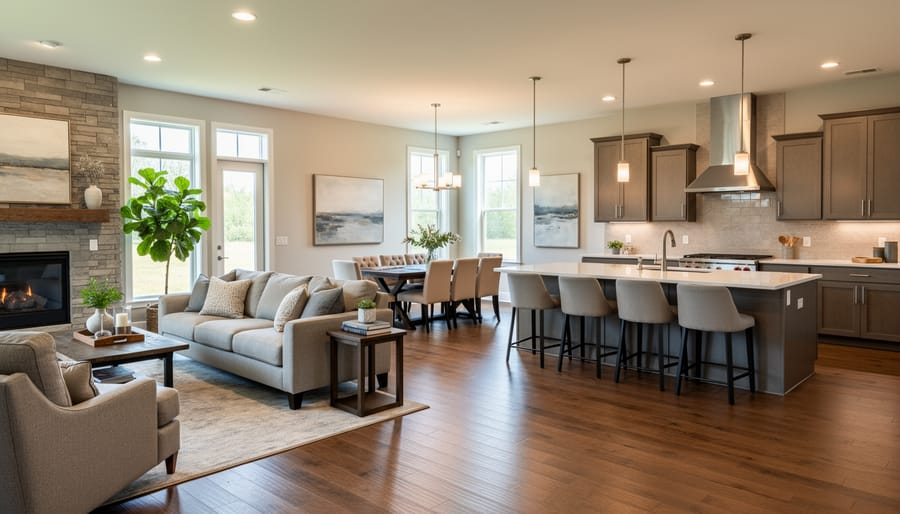
In open-concept areas, use area rugs, lighting changes, or subtle shifts in wall color to define zones without creating hard visual breaks. A kitchen island that shares countertop material with a nearby console table, or pendant lights that coordinate with living room fixtures, signals different functions while maintaining visual flow.
The goal is making transitions feel natural rather than abrupt, so walking through your home feels like moving through chapters of the same story.
Where and How to Use Seamless Design
Open-Concept Living Spaces
Open-concept living spaces present one of the trickiest design challenges: how do you define distinct zones without creating a cluttered, disconnected look? This is where seamless design becomes essential.
The key is establishing a unified color palette that runs through all three zones while using subtle variations in texture and materials to delineate each area. For instance, your kitchen might feature white cabinetry, your dining area could incorporate a natural wood table, and your living space might center on a textured gray sofa, all connected by complementary neutral tones and consistent metal finishes.
Strategic furniture placement acts as invisible boundaries. A sofa backs naturally separate living and dining areas without walls. Rugs anchor each zone while maintaining visual flow through similar patterns or coordinating colors.
Lighting plays a crucial role too. Different fixtures for each area, pendant lights over the kitchen island, a chandelier above the dining table, floor lamps in the living space, create definition while matching finishes keep everything cohesive. The result feels intentionally designed rather than haphazardly filled.
Room-to-Room Transitions
Creating harmony between private spaces like bedrooms and bathrooms requires thoughtful transition strategies that maintain your home’s visual thread without forcing identical twins.
Start with a consistent flooring material or color temperature that carries through hallways into adjacent rooms. If you switch flooring types, say, from hardwood in the hall to tile in the bathroom, choose shades that share undertones. Warm oak pairs naturally with cream or taupe tile, while cool-gray wood flows into white or light-gray surfaces.
Repeat accent colors across these connected spaces. The navy throw pillows in your bedroom can echo in bathroom towels or a hallway runner, creating subtle visual anchors. Door frames and trim in matching finishes act as literal frames that tie rooms together.
In hallways connecting multiple bedrooms, neutral wall colors provide breathing room while allowing each room its own personality. Think of hallways as galleries: they should complement what they lead to without competing for attention.
Small Space Solutions
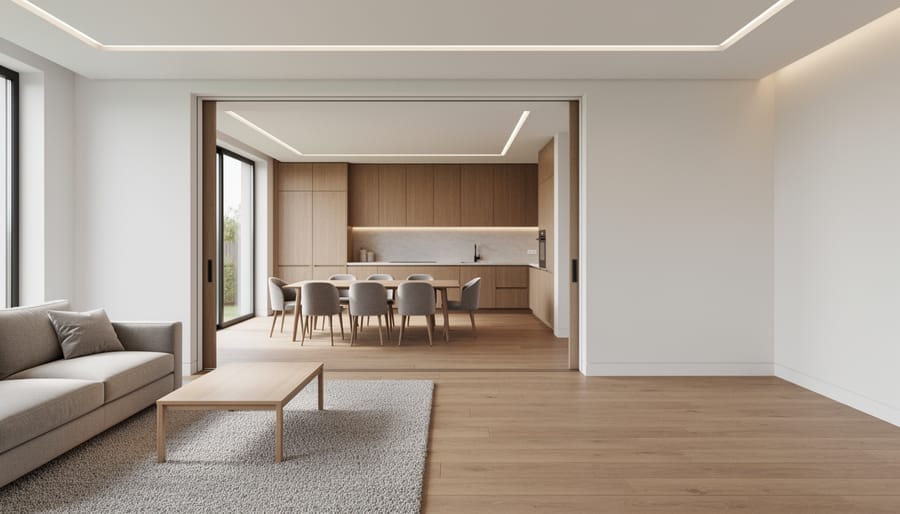
In compact homes, seamless design does the heavy lifting to make every square foot count. When you can’t spread out across multiple rooms, a cohesive color palette and consistent style eliminate visual clutter that makes small spaces feel even smaller. Unified finishes create the illusion of more space by letting your eye travel smoothly across the entire room instead of stopping at jarring transitions. Seamless principles also help you optimize traffic flow in tight quarters by choosing multi-functional pieces and arranging them to keep pathways clear. The result is an apartment or studio that breathes easier and lives larger than its footprint suggests.
Whole-Home Cohesion
Whole-home cohesion means every room feels like it belongs to the same story, even when styles vary slightly. Start with a foundational palette, three to four coordinating colors that appear in different proportions throughout your home. Repeat key materials like wood tones or metal finishes across spaces. This doesn’t mean everything matches perfectly; it means your dining room credenza echoes the wood in your bedroom nightstand, or your bathroom fixtures share the same finish as your kitchen hardware. When someone walks through your entire home, they should feel a consistent sensibility rather than experiencing each room as a separate project. This intentional thread transforms a collection of decorated rooms into a thoughtfully designed home.
Common Questions About Seamless Design
Does seamless design mean everything has to look the same?
Not at all. Seamless design creates visual flow through cohesive elements like color palettes and complementary styles, while still allowing distinct personality in each space. You can mix contemporary and traditional pieces successfully when they share connecting threads.
How much does achieving seamless design through an online service cost?
Online design services typically range from a few hundred to a few thousand dollars depending on the number of rooms and complexity, which is significantly less than traditional in-home designers. The virtual approach eliminates travel fees and reduces hourly consulting costs while delivering comprehensive room plans and shopping lists.
Can I achieve seamless design if I’m working room by room on a budget?
Yes, starting with a whole-home color palette and style direction allows you to implement changes gradually while maintaining cohesion. A designer can create a master plan that you execute in phases, ensuring each completed room fits into the larger vision even if finished months apart.
How long does the online seamless design process take?
Most online design projects take two to four weeks from initial consultation to final design delivery. You’ll typically have your complete plans, product links, and implementation guidance within a month, then execute at your own pace.
Beyond these common concerns, many homeowners wonder whether they’ll lose creative control in a seamless approach. The reality is the opposite. Virtual design platforms let you provide input throughout, reviewing mood boards and design concepts before finalization. You’re not locked into decisions until you’re confident they reflect your vision.
Another frequent question involves existing furniture. You don’t need to replace everything to achieve seamless design. A skilled designer incorporates pieces you love into the new plan, suggesting strategic additions or updates that bridge old and new. Sometimes a fresh paint color or new textiles are enough to integrate existing furniture into a cohesive scheme.
If you’re concerned about working with a designer you’ve never met in person, consider that virtual consultations often produce better results than quick in-home visits. You have time to articulate your needs through photos, Pinterest boards, and written descriptions. Designers can study your space thoroughly through measurements and images rather than making snap judgments during a rushed walk-through.
uses
Seamless design works beautifully across virtually any home setting, but it delivers the most noticeable impact in specific scenarios. Open-concept spaces benefit tremendously because the lack of walls means every design choice is visible from multiple angles, seamless principles prevent these areas from feeling chaotic or disjointed. Homes with awkward layouts or architectural quirks also gain from this approach, as consistent design language helps distract from structural limitations while creating visual flow.
Renters find seamless design particularly valuable since it maximizes existing features without requiring permanent changes. The cohesive look makes rental spaces feel more intentional and polished. Similarly, staged homes for sale leverage seamless design to help buyers envision themselves living in the space, a unified aesthetic photographs well and creates emotional connection during viewings.
Budget-conscious projects especially suit the seamless approach because you’re working with what you have rather than replacing everything at once. By focusing on how pieces relate to each other instead of buying all new furniture, you create a pulled-together look without the pulled-apart wallet.
Seamless design isn’t just about achieving a polished, cohesive look throughout your home, it’s also about making the entire journey from inspiration to installation feel effortless. When you work with a virtual design service that prioritizes both aesthetic harmony and process ease, you get the best of both worlds: rooms that flow naturally together and an experience that fits into your real life without endless showroom visits or confusing decisions.
The beauty of this approach is that it’s accessible to everyone, whether you’re tackling one room or reimagining your entire home. You don’t need a massive budget or months of free time to create spaces that feel intentional and connected. With the right guidance and a clear plan, you can transform your living environment without the stress that traditionally comes with design projects.
Ready to experience what seamless really means? Start your redesign with a personalized approach that brings clarity, creativity, and cohesion to every corner of your home.
Leave a Reply