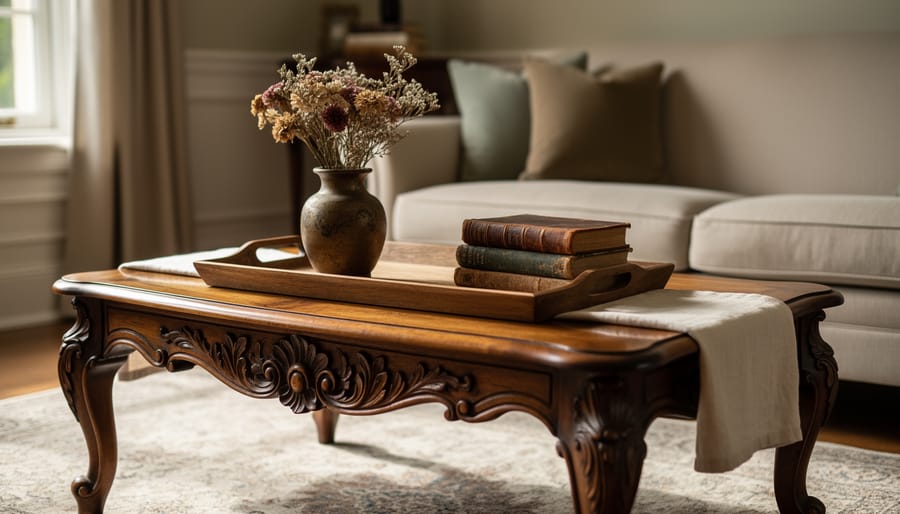
How to Style an Antique Coffee Table (5 Easy Steps to Timeless Elegance)
Styling an antique coffee table comes down to five key steps: protect the finish, anchor with symmetry, layer in height variation, add curated objects that complement the table’s era, and leave breathing room. The entire process takes about 15 minutes once you’ve gathered your pieces, and you don’t need any special design training to pull it off beautifully.
Your antique table deserves an approach that honors its character while making it functional for everyday life. Unlike modern pieces that can handle heavy styling, antique surfaces need protection from moisture rings, scratches, and heat damage. That means you’ll work smarter with fewer, more intentional pieces rather than overcrowding the space.
The beauty of this method is its flexibility. Whether you’re working with a Victorian carved walnut table or a mid-century modern piece with tapered legs, the same core principles create visual balance while preserving the craftsmanship that makes your table special. You’ll learn exactly which objects work best, how to arrange them without overwhelming the patina you love, and simple techniques to check your work as you go.
This guide walks you through the materials you’ll need (most of which you likely already own), specific precautions to protect delicate finishes, and a clear five-step process that works regardless of your table’s style or condition. You’ll also get targeted tips for different antique periods and answers to the most common questions about protecting vintage wood while keeping your space both stylish and livable.
What You’ll Need to Style Your Antique Coffee Table
Gathering the right materials before you start makes styling your antique coffee table easier and more enjoyable. You won’t need anything expensive or specialized, most items you likely already own or can find around your home.
Here’s what to collect:
- Decorative objects: Coffee table books, decorative trays, vases or bowls, candles or candlesticks to create visual interest and layers
- Greenery or florals: Fresh flowers, potted plants, or quality faux stems to bring life and color to your arrangement
- Textiles: Coasters, a small table runner, or decorative cloth napkins to protect the antique surface while adding softness
- Cleaning supplies: Soft microfiber cloths, wood cleaner appropriate for antique finishes (avoid all-purpose sprays), furniture wax or polish if needed
- Measuring tape: For checking proportions and ensuring your styling pieces fit the table’s scale without overwhelming it
Each category serves a specific purpose. Decorative objects provide the foundation of your styling and establish the overall aesthetic. Greenery adds an organic element that softens the formality of antique wood. Textiles protect your table from scratches, water rings, and heat damage, critical for preserving an antique’s finish and value. Proper cleaning supplies ensure you care for the piece correctly, since harsh chemicals can strip original patina or damage delicate finishes. The measuring tape might seem unnecessary, but it prevents the common mistake of choosing objects too large or small for your table’s dimensions.
Having everything within reach lets you experiment freely and find the perfect arrangement.
Before You Begin: Protecting Your Antique Piece
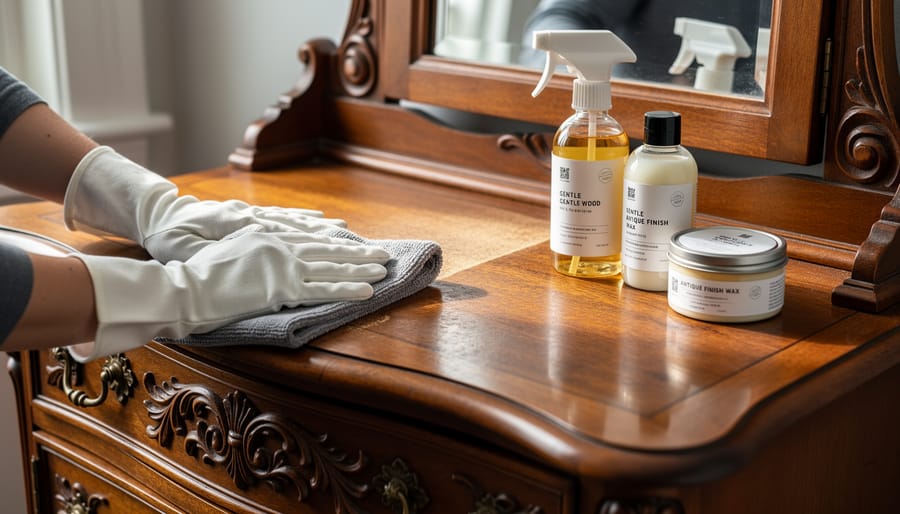
Your antique coffee table is more than a surface, it’s a piece of history that deserves care before you start styling. A few simple precautions will protect its finish, structure, and value while you create a beautiful display.
First, start with gentle cleaning appropriate to your table’s finish. Identify whether it has a wax, shellac, lacquer, or oil finish, because each reacts differently to moisture and products. Always test any cleaner on a hidden spot underneath the table first. Skip harsh chemicals and silicone sprays that can strip the patina or leave cloudy residue.
Consider your table’s structural integrity before loading it with heavy books or substantial trays. Delicate turned legs, thin veneer, or loose joinery can’t support the same weight as a modern piece. If you notice any wobble or previous repairs, distribute weight evenly and keep heavier items closer to the table’s center rather than the edges.
Understanding your antique’s finish and limitations isn’t fussy, it’s the foundation for styling that lasts. You want your table to look stunning and stay that way, not develop damage that mars both its beauty and its worth. Protection comes first, then creativity.
Step-by-Step: How to Style Your Antique Coffee Table
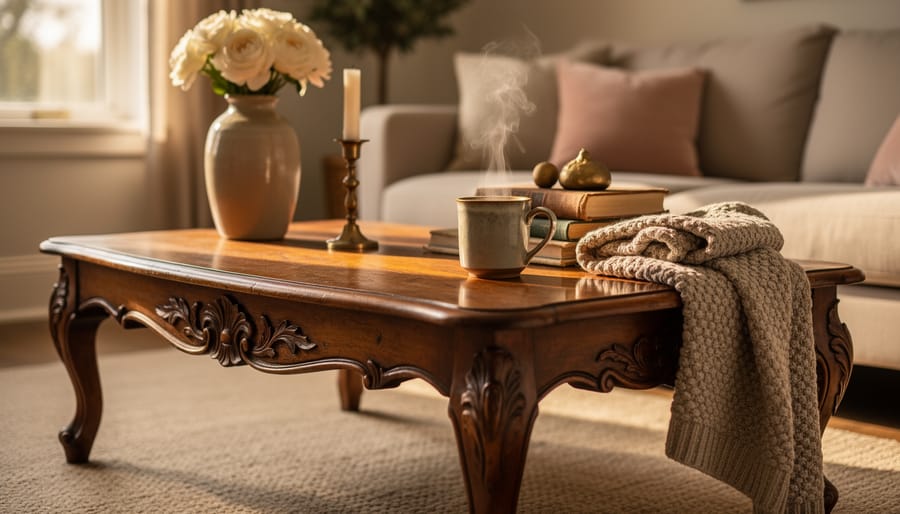
Step 1: Clean and Assess Your Table
Start with a gentle dusting using a soft, lint-free cloth. For deeper cleaning, match your product to the finish, use a barely damp cloth with mild soap for lacquer or polyurethane, and specialty wax or oil for older finishes. Test any cleaner on an inconspicuous spot first. While you clean, take note of the table’s dimensions, shape (round tables need circular styling flow, rectangular ones work with grouped zones), and wood tone. Notice the patina, those aged marks and color variations tell the story and shouldn’t be hidden. Understanding these characteristics now will guide every choice you make as you decorate a coffee table with antique character. Measure the usable surface area so you know how much real estate you’re working with for styling.
Step 2: Choose Your Anchor Piece
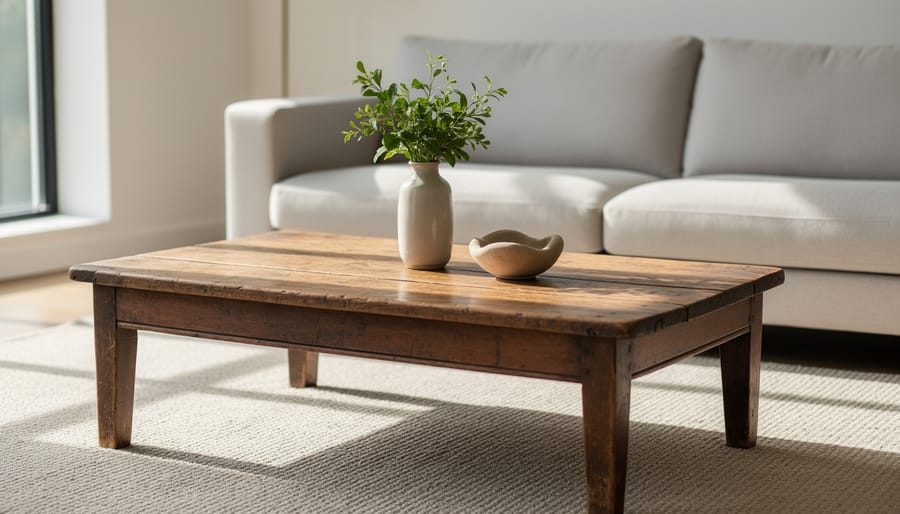
Every successful coffee table arrangement starts with an anchor piece, one substantial item that grounds your entire display. This could be a decorative tray, a stack of three to five oversized books, a large ceramic bowl, or a sculptural object. The anchor should feel weighty enough to command attention without overwhelming your antique table’s character.
For positioning, use the rule of thirds: imagine your table surface divided into a tic-tac-toe grid. Place your anchor where the lines intersect rather than dead center. On rectangular tables, position it off-center lengthwise, about one-third in from either end. Round or oval tables work beautifully with the anchor slightly off-center or, if you prefer symmetry, centered with balanced elements radiating outward. Square tables offer flexibility, try an asymmetrical corner placement for visual interest, or center the anchor and build around it.
Choose an anchor that complements your table’s finish. A brass tray highlights warm wood tones, while a ceramic bowl in soft neutrals pairs elegantly with darker antiques. The anchor sets your styling direction, so pick something you genuinely love.
Step 3: Layer with Height and Texture
Now that your anchor piece is in place, it’s time to build dimension. Flat surfaces look boring, your eye needs highs and lows to travel across the table.
Stack two or three coffee table books next to your anchor, placing a small decorative object on top. Add a candlestick or slender vase on the opposite side. Vary the heights dramatically, if your anchor sits at six inches, aim for items at three inches and ten inches to create visual rhythm.
Texture matters just as much as height. Antique wood begs for contrast: smooth brass candlesticks catch light beautifully against matte oak, while a ceramic bowl adds soft curves to counter angular grain patterns. Glass vases stay light and airy, preventing heaviness. Woven baskets or linen-wrapped stems introduce natural fibers that echo the organic quality of aged wood.
Use the triangle method to arrange these elements. Imagine connecting your three tallest pieces with invisible lines, they should form a triangle, not a straight row. This creates balance that feels natural rather than staged, guiding the eye around the entire surface instead of stopping in one spot.
Step 4: Add Life and Personal Touches
Now bring your antique coffee table to life with elements that make it uniquely yours. Fresh flowers or high-quality faux greenery add instant warmth, a small vase of eucalyptus, a potted succulent, or seasonal blooms soften the hard surfaces and create a welcoming feel.
This is where your personality shines through. A vintage magnifying glass, a treasured family photo in an ornate frame, or a collection of antique keys tells your story while honoring the table’s heritage. Choose one or two meaningful objects rather than crowding the surface with sentiment.
Let your table’s era guide your choices. Victorian pieces love romantic touches like old books with leather bindings, crystal bud vases, or cameo dishes. Mid-century modern tables pair beautifully with sculptural ceramics and a single dramatic bloom in a minimalist vessel. Rustic farmhouse styles welcome woven baskets, dried wheat bundles, or galvanized metal containers.
Seasonal swaps keep your styling fresh without requiring a complete overhaul. Autumn branches, winter pinecones, spring tulips, or summer lemons in a bowl celebrate the changing year while respecting your table’s timeless character.
Step 5: Edit and Refine
Stand back at least six feet from your table and take a critical look. Your eye should move smoothly across the arrangement without any one spot feeling too heavy or empty. If something catches your attention in a jarring way, it probably needs to go.
Now get practical. Can you actually set down a cup of coffee without rearranging everything? Is there room for the remote control you use daily? Your antique table needs to function in real life, not just look pretty for photos. Reserve at least a third of the surface for actual use.
Sit in each seating position around your coffee table. Can you see the person across from you without peering around a tall vase? Does anything block your view of the TV if that matters in your room?
Make small tweaks to spacing. Items shouldn’t touch each other or the table edge. Leave breathing room. Sometimes shifting a stack of books two inches to the left makes all the difference. This editing phase separates adequate styling from truly refined design.
How to Know Your Styling Works
Step back from your table and take a critical look. Your eye should travel naturally around the arrangement without getting stuck in one spot or feeling overwhelmed. There should be visible breathing room, empty space is just as important as the objects you’ve placed. If everything feels crowded or chaotic, remove one or two items.
Test functionality next. Can you set down a cup of coffee without moving things around? Is there space for a book or remote? An antique coffee table still needs to work for daily life, not just look pretty.
Check style cohesion by considering the room as a whole. Does your styling complement your existing furniture and decor? The antique table should feel like an intentional part of your space, not an isolated vignette.
Refresh your styling with the seasons, swap florals for fall branches, or lighter pieces for summer. As your room evolves, your coffee table can too. These same designer styling steps apply whether you’re starting fresh or updating what you have.
If you’re unsure whether your arrangement works or want personalized guidance for your specific antique piece, online design support can help you refine your styling choices and build confidence in your design decisions.
Styling Tips by Antique Coffee Table Type
Different antique styles speak different design languages, and your styling approach should honor each one’s unique character. What works beautifully on a carved Victorian piece might overwhelm a sleek mid-century table, so tailoring your decor to the table’s era creates harmony rather than conflict.
For Victorian ornate tables with carved legs and decorative inlays, less is genuinely more. These pieces already command attention with their intricate details, so keep your decor minimal. A single sculptural object, perhaps a vintage brass bowl or an elegant crystal vase with a simple floral arrangement, lets the table’s craftsmanship take center stage. Avoid covering large portions of the surface or creating clutter that competes with the table’s built-in drama.
Mid-century modern antique tables with their clean lines and tapered legs call for a minimalist approach that echoes their streamlined aesthetic. Think a small stack of design books with bold graphic covers, a single ceramic piece in a saturated color, or a low-profile sculptural candleholder. Keep edges visible and surfaces mostly clear. The beauty here lies in negative space and intentional placement rather than abundance.
Rustic farmhouse tables invite warmth and texture. Layer natural materials freely, a woven basket holding throw blankets, a chunky wooden dough bowl filled with seasonal items, mason jars with wildflowers, or a weathered metal tray. These tables can handle a more collected, lived-in look that feels gathered over time rather than carefully curated.
Carved Asian or exotic wood tables deserve reverence for their cultural heritage and craftsmanship. Use fewer pieces with greater intention. A simple bonsai or orchid, a handcrafted tea set, or a single piece of pottery that complements the wood’s tone and the table’s origin shows respect for the aesthetic tradition. Let the intricate carving patterns remain visible and avoid Western decor that clashes with the table’s cultural context.
Common Questions About Styling Antique Coffee Tables
How many items should I place on an antique coffee table?
Three to five thoughtfully chosen items create visual interest without overwhelming the table’s character. Use the rule of odds, groupings of three or five feel more natural than even numbers, and always leave some open surface visible to honor the beautiful wood.
Can I mix modern decor with an antique table?
Absolutely. Pairing contemporary accessories with an antique coffee table creates dynamic contrast and prevents your room from feeling like a museum. A sleek glass vase or modern art book alongside vintage brass candlesticks bridges old and new beautifully.
How do I style a very small antique coffee table?
Stick to one anchor piece, a small tray or single stack of books, then add just one or two complementary items like a petite vase or candle. Small tables demand restraint, so embrace minimalism and let the table itself be the star.
What if my antique table has damage or imperfections?
Those marks tell the table’s story and add authentic character. Rather than hiding scratches or worn spots, work around them by placing a decorative tray or stack of books over the most damaged areas while celebrating the patina elsewhere as part of the table’s charm.
How often should I restyle my antique coffee table?
Seasonal refreshes, four times a year, keep your space feeling current without constant fussing. Swap florals for seasonal greenery, rotate books, or switch candle scents, but keep your core arrangement intact so the table maintains its role as a grounding element in your room.
Should I use a tray on an antique surface?
A tray protects the finish from spills and rings while corralling smaller items into a cohesive grouping. Choose one that complements your table’s era, a silver tray for Victorian pieces, a wooden or woven tray for farmhouse styles, and make sure it has felt pads on the bottom to prevent scratches.
These questions capture the real hesitations people have when styling antique pieces. The beauty of working with antiques is that there’s no single right answer, your personal style and the table’s unique personality should guide your choices. If you’re still uncertain about how to make your specific antique coffee table work in your space, remember that styling is an evolving process. Start with the basics from these steps, live with your arrangement for a week, then adjust based on how you actually use the table daily.
Styling your antique coffee table is all about balance. You’re honoring a piece with history while making it work for how you actually live today. Don’t be afraid to experiment, move things around, swap out accessories with the seasons, and trust your instincts. What feels right to you is usually right for your space.
The beauty of coffee table styling is that it’s never truly finished. As your life changes, your styling can change too. That stack of design books might become a collection of travel mementos next year, and that’s exactly how it should be.
If you’d like personalized guidance tailored to your specific antique piece and room, I’d love to help. At A Design Difference, we offer virtual design consultations that show you how seamless design works in your home, no matter where you’re located. Let’s create a look that celebrates your antique table’s character while making your space truly yours.
Leave a Reply