How to Decorate a Coffee Table Like a Designer in 7 Simple Steps
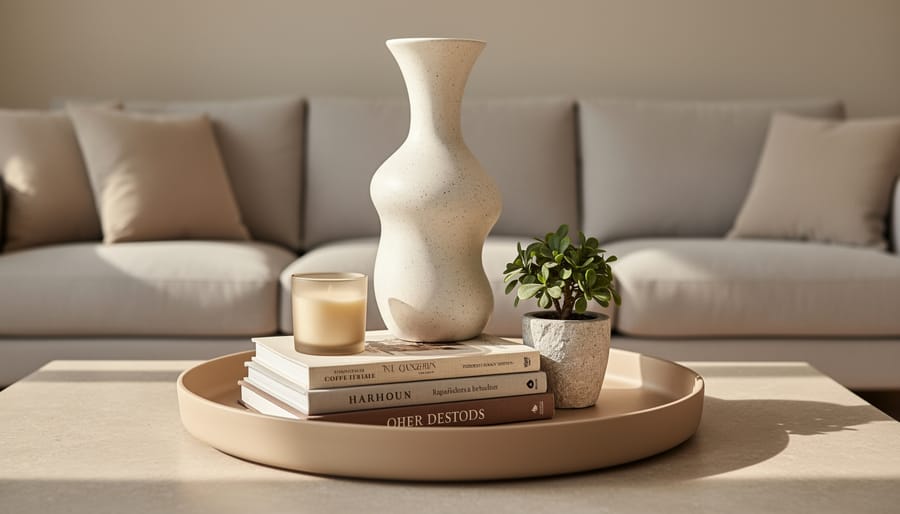
Decorating a coffee table comes down to balancing three layers: a foundation piece (like a tray or stack of books), a vertical element (such as a vase or sculpture), and a personal accent (candles, small plants, or decorative objects). This three-layer method creates visual interest while keeping your table functional for daily use. The entire styling process takes about 15 minutes once you’ve gathered your pieces, and the best part is you can rework it anytime your mood shifts.
Your coffee table sits at the heart of your living room, so getting it right matters more than you might think. A well-styled surface pulls your whole space together, creating that polished look without feeling overdone or cluttered. The trick is working with odd numbers of items (groups of three or five look more natural than pairs) and varying heights to guide the eye across the table rather than landing in one flat plane.
This guide walks you through the exact process, from choosing your materials to placing each piece with intention. Whether you’re starting with an empty table or trying to fix a cluttered mess, you’ll learn how to create seamless design that feels both beautiful and livable. No expensive purchases required, just a smart approach to arranging what you already own (or picking up a few budget-friendly additions).
What You’ll Need to Style Your Coffee Table
You don’t need to buy everything at once or spend a fortune to create a beautifully styled coffee table. Most of what you need is already in your home, and what you do purchase can work across multiple rooms and seasons. Think of these items as your coffee table styling toolkit, mix and match based on what you have and what fits your space.
Foundational Pieces
These anchor your arrangement and create structure. A decorative tray (wood, metal, or lacquer) corrals smaller items and defines zones on your table. Trays range from $15 at HomeGoods to $50+ for designer options, but a vintage tray from a thrift store works just as well. Coffee table books add instant sophistication and height, look for oversized hardcovers on topics you actually care about, not just pretty spines. You can find stunning books at discount stores like TJ Maxx for $10-15 instead of $40+ retail.
The Complete Styling Kit
Here’s everything you might use to create a well-balanced coffee table arrangement:
- A tray or stack of 2-3 coffee table books as your foundation
- One sculptural object or decorative bowl for visual interest
- Fresh flowers, a small plant, or a vase (even when empty, a beautiful vase adds shape)
- Candles in varying heights, pillar candles, votives, or a statement candleholder
- A small decorative box for corralling remotes or coasters
- Something personal: a collected object, small framed photo, or travel souvenir
- Functional items you actually use: coasters, matches, a catch-all dish
You won’t use all of these at once, that’s the point. Having options lets you rotate items seasonally and find combinations that feel fresh. The best coffee table styling uses 5-7 items total, so you’re choosing from this toolkit, not displaying everything simultaneously.
Budget-Friendly Alternatives
Skip expensive décor stores and shop your own home first. That ceramic bowl from your kitchen? It’s a coffee table catchall. Hardcover books from your shelves work perfectly in stacks. Glass jars become bud vases, and branches from your yard cost nothing but look sculptural in the right vessel.
Before You Start: Important Styling Considerations
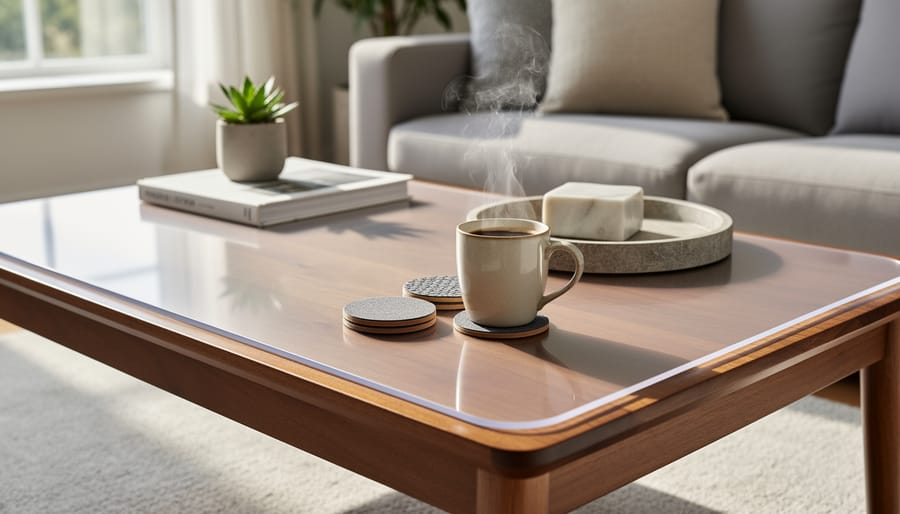
Before you start arranging decorative pieces, take a moment to consider both your table’s condition and your household’s needs. A beautifully styled coffee table shouldn’t come at the expense of your furniture or your family’s safety.
First, protect your table’s surface. Use felt pads under ceramic vases, coasters under plants, and trays to catch any drips from candles or fresh flowers. Water rings and scratches from heavy objects can permanently damage wood finishes, so think of each item’s base before you set it down.
If you have kids or pets, pay special attention to placement. Keep items away from edges where they’re easily knocked off, position decorative objects toward the center of the table and skip anything with sharp corners at toddler eye-level. Candles should always sit on stable bases, never near curtains or paper items, and you should blow them out whenever you leave the room.
Finally, resist the urge to cover every inch of your table. Overcrowding creates visual chaos and makes the table unusable, which defeats the entire purpose of styling it in the first place. You’ll want to leave at least 40% of the surface clear for drinks, books, and everyday living.
The 7-Step Coffee Table Styling Process
Step 1: Start with a Clean Slate
Remove every single item from your coffee table, even pieces you love and plan to put back. This isn’t just about making room, it’s about resetting your perspective. When your table is constantly loaded with remotes, magazines, and yesterday’s coffee mug, you stop seeing the surface as a design opportunity.
Grab a microfiber cloth and your favorite cleaner (or just warm water and a drop of dish soap) and wipe down the entire surface. As you clean, notice the table’s actual size, shape, and finish. That clear, empty surface is your canvas. You’ll be surprised how different your styling choices become when you’re working with a genuinely blank slate instead of shuffling things around the same old clutter.
Step 2: Anchor with a Foundation Piece
Once your table is clean, choose one substantial item to act as your foundation, this is typically a decorative tray or a stack of two to three oversized coffee table books.
A tray creates an instant boundary that corrals smaller objects and prevents your arrangement from sprawling across the entire surface. Choose one that’s roughly one-third to one-half the length of your table. Rectangular trays work well on most table shapes, while round trays soften angular tables.
If you prefer books, stack them horizontally with the largest on bottom. This creates a flat platform for layering other objects on top while adding instant sophistication. Art, design, or photography books with beautiful covers work best since they become part of the visual display.
This foundation piece does the heavy lifting, it establishes your first styling zone and gives everything else a home.
Step 3: Build Height and Visual Interest
With your foundation in place, it’s time to create visual dimension. This is where your coffee table transforms from flat to dynamic.
Think in layers and triangles. Place three objects of different heights together, a tall candlestick, a medium vase, and a low decorative bowl, for example. This creates what designers call triangular composition, naturally guiding the eye across the arrangement.
Vary not just height but also shape and texture. Pair a round ceramic piece with angular coffee table books and an organic plant stem. The contrast makes each element stand out while creating a cohesive whole.
Don’t line everything up in a row. Cluster items in small groupings, leaving negative space between clusters. This rhythm of “full and empty” gives your styling breathing room and prevents it from looking cluttered or stiff.
Step 4: Bring in Natural Elements
Natural elements instantly soften a coffee table arrangement and keep it from feeling too styled or sterile. A small vase with fresh eucalyptus stems, a potted succulent, or even a bowl of smooth river stones brings life and texture that manufactured decor can’t replicate.
Choose greenery that fits your maintenance reality. Fresh flowers make an impact but need weekly replacement. A low-light pothos or snake plant works if you’re not near a window. Faux botanicals are fine if they’re high quality, cheap fake plants look worse than none at all.
Scale matters. A tiny bud vase gets lost on a large table, while an oversized arrangement blocks sightlines. Your natural element should complement your other pieces in height and visual weight, not compete with them.
Step 5: Include a Personal Touch
This is where your coffee table becomes yours instead of a showroom display. Add one meaningful object that has a story, a ceramic bowl from your honeymoon in Portugal, a vintage camera you inherited from your grandfather, or a small sculpture you picked up at a local art fair. The key is choosing something that sparks a conversation or simply makes you smile when you see it. Don’t overthink this step: the best personal touches are items you already own and love, not things you feel pressured to buy. Place this piece where it naturally integrates with your existing arrangement, treating it with the same design consideration as your decorative objects rather than setting it apart as a shrine.
Step 6: Add Functional Elements
Your coffee table isn’t just a display, it’s a working surface you interact with daily. This is where function meets form, and honestly, it’s what separates a styled table from a practical styled table.
Add items you’ll genuinely use. Tuck a stack of coasters next to your books so they’re within reach when you set down your morning coffee. Place a decorative box or small bowl to corral remotes and chargers, chaos contained looks intentional. Include a candle you’ll actually light, not just admire, positioned safely away from fabric or paper. Maybe that’s a matchbox nearby in a pretty holder.
The secret is choosing functional pieces that also happen to be beautiful. Leather coasters instead of cork. A carved wooden bowl instead of plastic. When your practical items earn their keep and their spot visually, you’ve nailed it.
Step 7: Edit and Refine
This is the hardest step because it feels counterintuitive, you’ve just spent time carefully arranging everything, and now you need to remove pieces. But here’s the secret designers know: a coffee table that’s 70-80% full always looks better than one that’s 100% full. Step back about six feet and look at your arrangement with fresh eyes. If it feels cluttered or your eye doesn’t know where to land first, remove one item. Then wait a moment and look again. Often, taking away just one or two pieces transforms a busy arrangement into a polished one. The empty space, what designers call “negative space”, is actually doing important visual work, giving your eye places to rest and making each remaining object feel more intentional. You’re not looking for sparse or empty; you’re looking for breathing room.
How to Know Your Coffee Table Styling Works
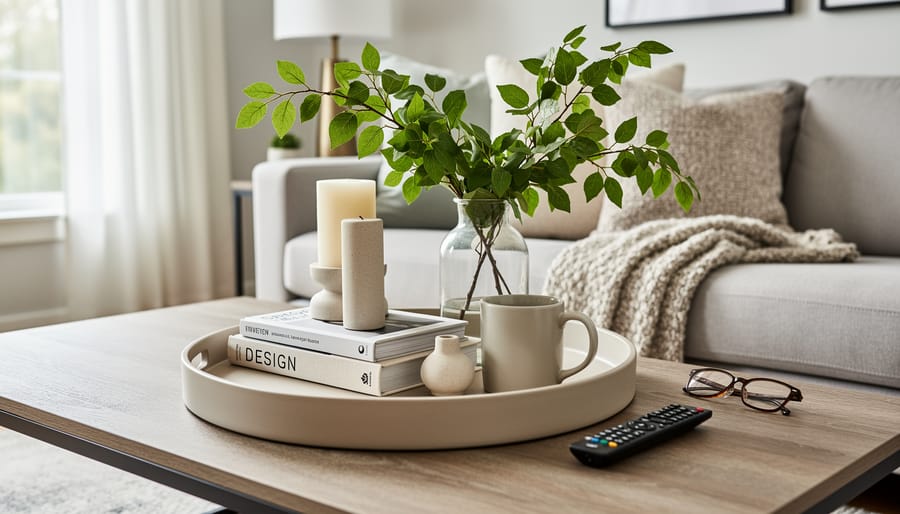
You’ve styled your coffee table, but how do you know it actually works? Run through these four quick tests before calling it finished.
The Sit-Down Test: Lower yourself onto your sofa and evaluate the table from your normal sitting position. Can you comfortably set down a drink without rearranging everything? Is there space for your laptop or a snack plate? If you’re constantly moving decorative items aside to use the table, you’ve gone too far. A coffee table should be functional first, beautiful second.
The Walk-Around Test: Circle your coffee table and look at it from every approach angle. Does the arrangement look intentional from the doorway? From the opposite sofa? Many people style only from one viewpoint and end up with a display that looks bare or cluttered from other spots in the room. Your tallest elements should create interest without blocking sightlines across the table.
The Balance Check: Stand back and squint slightly at your arrangement. The visual weight should feel distributed rather than clustered on one end. This doesn’t mean perfect symmetry, in fact, asymmetrical arrangements often feel more relaxed, but one side shouldn’t look noticeably heavier or busier than the other.
The Function Test: Reach for items as you normally would. Can you grab a coaster without disturbing the whole arrangement? Is that candle you styled actually accessible enough to light, or is it buried behind three other objects? If your decorative setup makes everyday items harder to use, simplify until form and function coexist peacefully.
Common Coffee Table Styling Questions
How many items should I put on my coffee table?
Aim for 3-5 items or grouped arrangements. This creates visual interest without overwhelming the space, and more importantly, leaves room for actually using the table for drinks, magazines, or your feet after a long day.
What if my coffee table is very small or very large?
Small tables (under 30 inches) work best with just 2-3 carefully chosen pieces, a small plant and a candle, for instance. Large tables need more substantial items or multiple grouped zones to avoid looking sparse, but resist filling every inch.
How often should I change my coffee table styling?
Refresh seasonally if you enjoy the process, but there’s no rule. Swap out flowers weekly, rotate books monthly, or leave a favorite arrangement untouched for a year, whatever feels right for your lifestyle.
Can I style a coffee table beautifully on a tight budget?
Absolutely. Use books you already own, clip greenery from your yard, display a bowl of lemons from the grocery store, and shop thrift stores for unique trays or objects. The styling formula works regardless of price point.
The question about matching your coffee table to other room elements deserves a longer answer. Your coffee table doesn’t need to perfectly match your sofa or curtains, but it should feel like it belongs in the space. Pull one or two colors from your room’s palette, a vase that echoes your throw pillows, books with spines in your accent color. This creates whole-room cohesion without looking overly coordinated. The goal is visual conversation between elements, not a matchy-matchy showroom.
Think of your coffee table as the bridge between your furniture and your personality. It can introduce a pop of color your room needs or tone down a busy space with neutral, calming objects. Trust your instincts, if something looks off when you sit on your sofa, it probably is.
Next Steps: Refreshing and Evolving Your Style
Your coffee table styling isn’t meant to stay frozen in time. Swap in seasonal touches every few months, a bowl of pinecones in winter, fresh citrus in summer, to keep your space feeling current without buying new décor. Walk through your home and pull items from other rooms: that vase gathering dust on a shelf might be exactly what your coffee table needs. When you notice your arrangement feeling stale or your whole living room lacking cohesion, that’s the signal to consider online design help. A Design Difference specializes in personalized virtual solutions that consider your lifestyle, existing pieces, and budget. A quick designer consultation can help you refine not just your coffee table but create a cohesive look across your entire space.
Leave a Reply