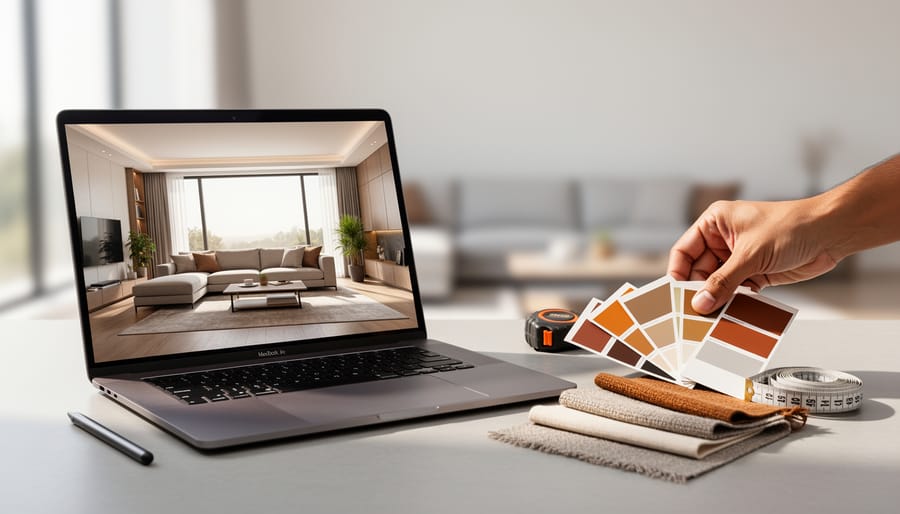
How Our Seamless Online Design Process Takes You from Blank Walls to Dream Space
Great design doesn’t happen by accident. It follows a clear, proven path that transforms your vague Pinterest dreams into a space you’ll actually love living in.
Whether you’re working with a designer for the first time or you’ve been burned by bad renovations before, understanding the design process removes the mystery and puts you in control. You’ll know exactly what’s happening at each stage, what decisions you need to make, and how your designer is working behind the scenes to bring your vision to life.
The 8-step design process isn’t some rigid formula that ignores what you want. Think of it more like a roadmap that keeps your project moving forward while leaving plenty of room for your personality and preferences. Each step builds on the last one, catching potential problems early and making sure nothing gets forgotten along the way.
Here’s what makes this approach so effective: it breaks down what could be an overwhelming project into manageable chunks. Instead of trying to pick paint colors, furniture, and lighting all at once, you tackle each decision at the right time with the right information. You’re not guessing whether that sofa will fit or hoping the colors work together. You’re seeing it all planned out before spending a dime.
Virtual design services have made this process even more accessible. You don’t need to live in a major city or clear your schedule for endless in-person meetings. The same professional framework that’s been refining beautiful spaces for decades now works around your life, your budget, and your timeline.
Step 1: Discovery Call, Getting to Know You and Your Space
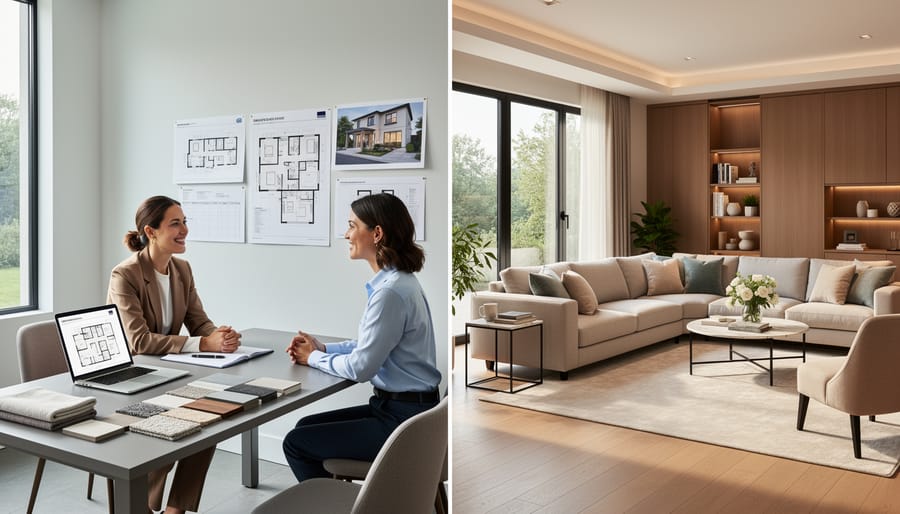
Think of the discovery call as your design relationship’s first date. It’s where the magic begins, and honestly, it’s one of our favorite parts of the whole process. This isn’t a sales pitch or a formal interrogation. It’s a genuine conversation where we get to know you, your space, and what makes your home feel like, well, home.
During this virtual consultation, we’ll chat about how you actually live in your space. Do you work from home? Have kids or pets running around? Love hosting dinner parties or prefer quiet nights in? These details matter because great design isn’t just about pretty rooms. It’s about creating spaces that work beautifully for your real life.
We’ll also dive into your design preferences and challenges. Maybe you’re drawn to cozy, warm interiors but your north-facing living room feels like a cave. Or perhaps you love minimalism but can’t figure out where to hide all your stuff. This is the time to share everything, including your budget range. No judgment here. We’ve worked with every budget imaginable, and being upfront from the start helps us create solutions that actually fit your financial reality.
The beauty of this initial conversation is that it removes the pressure. You’re not committing to anything except exploring possibilities. We’re building trust and understanding, figuring out if we’re the right fit for each other. By the end of our call, you’ll have a clear picture of how we can help transform your space, and we’ll have the insights needed to create a design that truly reflects who you are.

Step 2: Design Brief, Capturing Your Vision in Words
Once your designer has heard your ideas, seen your space, and asked all the right questions, it’s time to turn that conversation into something concrete. This is where the design brief comes in.
Think of the design brief as your project’s blueprint. Your designer takes everything you’ve discussed and creates a comprehensive document that captures your vision on paper. It’s not just notes from a meeting. This is a strategic roadmap that outlines exactly what you want to achieve, how you want your space to feel, and what practical considerations need attention.
A solid design brief typically includes your project goals, whether that’s creating a more functional kitchen or transforming a bland bedroom into a cozy retreat. It captures your style preferences, noting the colors, textures, and aesthetic direction you’re drawn to. Functional needs get documented too, like storage requirements or lighting concerns. Your budget parameters are clearly stated, and a realistic timeline maps out when things will happen.
This document serves a crucial purpose. It keeps everyone aligned throughout the project. When decisions need to be made later, you can refer back to the brief to ensure choices support your original vision. For virtual design services, this written record becomes especially valuable since you might not have daily face-to-face check-ins.
Your designer should share this brief with you for review. Read it carefully. Does it sound like your project? Does it capture what you’re hoping to create? This is your chance to clarify anything that feels off before design work begins.
Step 3: Concept Development, Where Ideas Come to Life
This is where the magic really starts to happen! Your designer takes everything learned during the consultation and discovery phase and begins translating your vision into tangible design concepts. Think of this as the creative brainstorming stage, where possibilities are explored and your space starts to take shape on screen.
Your designer will develop initial concepts that capture the style and functionality you’re looking for. This typically includes:
- Mood boards that establish the overall aesthetic and feeling
- Color schemes with specific paint colors and coordinating palettes
- Layout options showing different furniture arrangements
- Style direction that defines the design language for your space
- Preliminary furniture selections that fit your budget and needs
The beauty of virtual design is that this exploration happens digitally, which means you get to see different directions without any commitment or costly mistakes. Want to compare a cozy, traditional living room against a sleek modern approach? Your designer can show you both. Curious if that bold navy wall will work with your existing hardwood floors? You’ll see it visualized before any paint is purchased.
This creative freedom is incredibly valuable. Designers can experiment with different furniture placements, test various color combinations, and mix styles in ways you might not have considered. The virtual environment becomes a playground for ideas, and you get a front-row seat to the creative process. You’re not guessing what something might look like or trying to imagine how pieces will work together. Instead, you’re seeing actual concepts that bring your space to life, making it easier to provide feedback and refine the direction before moving forward.
Step 4: Interactive Design Boards, Your Digital Design Playground
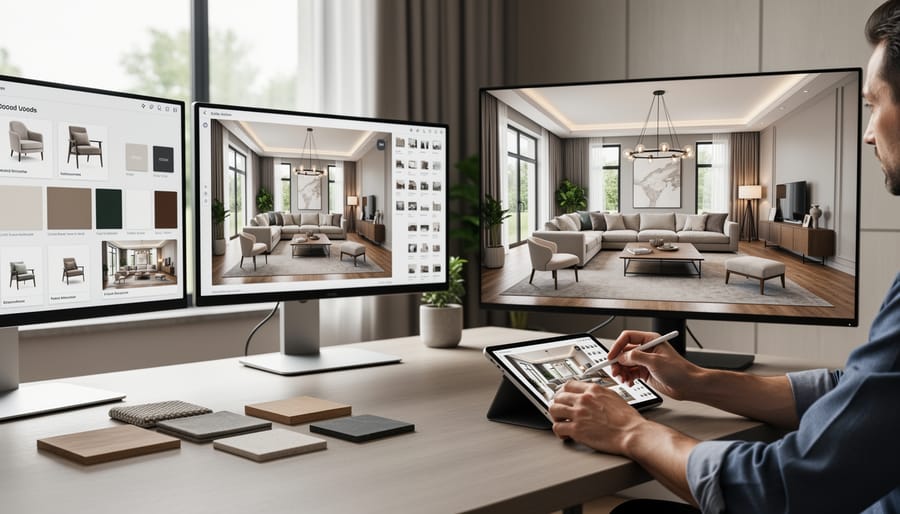
This is where the magic really starts to come together. Your designer creates a visual digital board that brings every element of your room into one cohesive view. Think of it as a virtual mood board on steroids, where you can see exactly how your selected sofa pairs with those throw pillows, how the paint color works with your rug choice, and whether that accent chair truly complements the overall aesthetic.
These interactive boards are designed to be user-friendly and fun to explore. You’ll see furniture pieces, fabric swatches, paint colors, lighting fixtures, and decorative accessories all arranged together. No more trying to imagine how things might look or second-guessing your choices. Everything is right there in front of you, creating a complete visual story of your future space.
The beauty of this digital approach is the collaborative aspect. You’re not just passively receiving a design and hoping for the best. You can click through the board, zoom in on details, and really examine each element. Got questions about a particular fabric choice? Want to swap that lamp for something different? You can provide feedback directly on the board, making the process incredibly efficient.
This real-time collaboration means fewer miscommunications and faster decision-making. Your designer can make adjustments based on your input and update the board so you can see changes immediately. Maybe you love the color palette but want a different coffee table style. Within days (sometimes hours), you’ll see updated options that better match your vision.
The interactive nature keeps you engaged and excited throughout the process, ensuring the final design truly reflects your personal style and needs.
Step 5: 3D Renderings, Seeing Your Space Before It Exists
This is where the design truly comes to life. After all the planning, measuring, and decision-making, you get to see your future space in photorealistic detail before anything is purchased or moved. 3D renderings aren’t just pretty pictures. They’re your chance to walk through your redesigned room visually and know exactly what you’re getting.
We’ve all been there, staring at paint swatches or fabric samples, trying to imagine how everything will look together. Your brain can only do so much. That’s why 3D visualizations are such a game-changer in the virtual design process. You’ll see your new sofa against that wall color you chose, the lighting fixtures casting their glow, the rug anchoring the space. Every element in its place, working together as a cohesive whole.
I was nervous about choosing that bold wallpaper, but seeing it in the 3D rendering made me confident it was exactly right for the space.
This is the moment that transforms uncertainty into excitement. Many people worry about making expensive mistakes or committing to a design direction that might not work out. The renderings remove that guesswork. If something doesn’t feel right, you can say so now, before you’ve spent a dime on furniture or paint. Maybe the coffee table looks too large, or you’d prefer a different accent color. These tweaks are simple at this stage.
The renderings also become your shopping blueprint. You’ll know precisely what you’re looking for and can shop with confidence. No more second-guessing whether that lamp will fit the vibe or if the curtains are the right length. Everything has been visualized, measured, and planned. You’re seeing your space before it exists, which means you can move forward knowing your investment will create the room you’ve been dreaming about.
Step 6: Revision and Refinement, Perfecting Every Detail
This is where your design truly becomes yours. After reviewing the initial concept, you’ll have the chance to request changes, and we genuinely encourage it. Want to swap that accent chair for something with a different silhouette? Need the wall color a shade lighter? Prefer a different coffee table style? Let’s make it happen.
Think of this step as a conversation. You might love 90% of the design but feel uncertain about a few pieces. That’s completely normal. We’ll work together to adjust colors, exchange furniture items, or tweak layouts until everything feels just right. Maybe you’ve decided the bold pattern we suggested feels too daring, or perhaps you want to go even bolder. Both reactions are perfectly fine.
The revision process is collaborative and flexible. You’re not being difficult by asking for changes. You’re helping us understand your vision more clearly. Sometimes it takes seeing a design proposal to realize what resonates with you and what doesn’t. That’s valuable insight.
We typically go through a few rounds of refinement, and there’s no pressure to approve everything immediately. Take your time reviewing each element. Show the design to your partner or roommate. Live with the concept boards for a few days if you need to. The goal is for you to feel absolutely confident and excited about every single piece before we move forward. Your enthusiasm for the final design matters far more than rushing through approvals.
Step 7: Final Design Package, Your Complete Implementation Guide
This is where all your patience pays off. You receive a comprehensive design package that translates every decision into actionable steps you can tackle at your own pace.
Your shopping lists are organized by room and priority level, complete with direct product links to make purchasing effortless. No more wandering store aisles wondering if you’ve got the right shade of blue or the correct size rug. Each item includes the exact dimensions, colors, and quantities you need. We even provide budget-friendly alternatives for key pieces, so you have options if something goes out of stock or doesn’t quite fit your budget.
The layout plans come with precise measurements showing where every piece of furniture should go. These aren’t just pretty pictures. They’re scaled floor plans that account for traffic flow, electrical outlets, and natural light. You’ll see exactly how much space to leave between your sofa and coffee table, where to hang that artwork, and which wall gets the accent color.
Installation and styling guides walk you through the implementation process step by step. Think of them as your designer whispering helpful tips as you arrange your space. You’ll learn the proper height to hang curtains, how to layer your throw pillows for that designer look, and which items to place first for the best results.
Everything is organized into a digital package you can access from your phone while shopping or reference from your tablet while arranging furniture. You’re not left guessing or second-guessing. You have a complete roadmap that takes you from empty room to finished space with confidence.
Step 8: Implementation Support, We’re With You to the Finish Line
You’ve received your design package and placed your orders. Now the fun part begins! This is where your vision starts taking shape in real life, and we want to make sure everything goes smoothly. Our designers stay actively involved during the implementation phase because we know that turning a design plan into a finished room rarely happens without a few questions along the way.
Running into issues is completely normal, and that’s exactly what this phase is for. Maybe the sofa you ordered is suddenly on backorder and you need a quick substitution. Perhaps the paint color looks different than you expected and you’re second-guessing the choice. Or you’re standing in your living room holding two throw pillows, genuinely unsure which one goes on which side of the couch. These are the real-world moments where having your designer available makes all the difference.
We help troubleshoot delivery problems, suggest alternative products if your first choice falls through, and provide styling guidance as you’re arranging furniture and accessories. Think of us as your design safety net. You’re not figuring this out alone, and you’re definitely not bothering us with questions. We genuinely want to see your space come together beautifully, and sometimes that means walking you through the final details until everything feels just right. Your success is our success, and we’re invested in getting you across that finish line.
There you have it. Eight clear steps that take you from “I need help with this room” to “I absolutely love this space.” No mystery, no stress, just a straightforward path to getting the home you’ve always wanted.
The beauty of this online design process is that it puts professional design expertise within reach, no matter where you live or what your budget looks like. You don’t need to invest thousands upfront or commit to a complete home overhaul. Maybe you’re just tackling one bedroom or freshening up your living room. That’s perfect. Every project deserves thoughtful design, and this process works beautifully whether you’re redesigning a single space or planning something bigger.
What really makes this approach special is how it removes all the guesswork. You know exactly what happens next, what to expect, and how to move forward at your own pace. Design stops being this intimidating thing only other people can do and becomes something genuinely enjoyable.
Ready to see what’s possible for your space? Your design journey can start today, and you might be surprised at how simple and fun the process actually is. Take that first step. Your dream room is closer than you think.
Leave a Reply