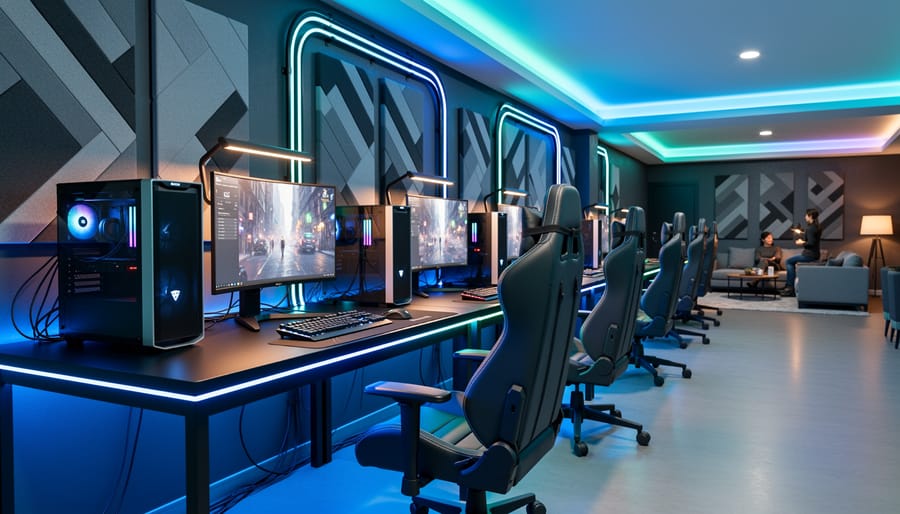
Transform Your Business with a Gaming Lounge That Keeps Players Coming Back
Position gaming stations near power outlets and ethernet connections to minimize visible cable runs across your lounge floor. Platforms like jon bet require stable internet connections, so hardwire stations whenever possible rather than relying solely on WiFi to prevent frustrating lag during gameplay.
Layer your lighting with dimmable overhead fixtures, adjustable task lights at each gaming station, and ambient LED strips along walls or behind screens. This creates visual depth while reducing eye strain during extended gaming sessions—crucial for keeping customers comfortable and engaged.
Choose commercial-grade seating with lumbar support and adjustable heights, spacing stations at least four feet apart for privacy and noise control. Gaming lounges differ from home setups because customers stay longer when they’re genuinely comfortable, directly impacting your revenue.
Install acoustic panels on walls and ceilings to manage sound levels without creating dead silence—you want an energetic atmosphere, not a library. Strategic sound absorption prevents that overwhelming casino floor noise while maintaining the excitement that keeps players engaged.
Design flexible zones that can adapt as your business grows. Create distinct areas for serious players who want focused quiet spaces and social gamers who enjoy the communal energy. This flexibility allows you to accommodate different customer preferences without requiring expensive renovations later.
Your gaming lounge design directly influences how long customers stay, how often they return, and whether they recommend your space to others. Every design choice—from chair selection to cable management—either enhances or disrupts the gaming experience you’re working to create.
Why Your Gaming Lounge Design Matters More Than You Think
You might think your gaming lounge is simply about providing computers and internet access, but the truth is, your space design directly impacts your bottom line. The environment you create influences how long customers stay, how comfortable they feel, and ultimately, whether they’ll become regulars at your establishment.
Think about it this way: when someone settles in for an online gaming session, they’re making a choice about where to spend their time and money. A well-designed lounge that incorporates contemporary design principles creates an atmosphere that encourages extended visits. Comfortable seating means players won’t shift restlessly after thirty minutes. Proper lighting reduces eye strain, allowing for longer sessions without discomfort. These aren’t just nice-to-haves; they’re revenue multipliers.
The psychological impact of your space can’t be overstated either. Colors, textures, and layout all work together to create a mood that either energizes or relaxes your guests. A thoughtfully designed lounge feels intentional and premium, which subconsciously tells visitors that their experience matters. This perception translates into increased confidence and engagement, directly affecting betting behavior and overall spending.
Here’s something interesting: ambiance doesn’t just attract customers, it keeps them coming back. When someone has a positive spatial experience, they associate those good feelings with your venue. Maybe it’s the cozy corner booth that’s become their lucky spot, or the perfect balance of background music that keeps them focused without distraction. These details create emotional connections.
Your gaming lounge design also sets you apart from competitors. In a market where many venues offer similar gaming options, your physical space becomes your unique selling point. It’s the difference between being just another gaming spot and becoming the preferred destination where players genuinely want to spend their leisure time. Smart design isn’t an expense; it’s an investment in customer loyalty and sustained business growth.
Creating the Right Atmosphere: Lighting and Color Psychology
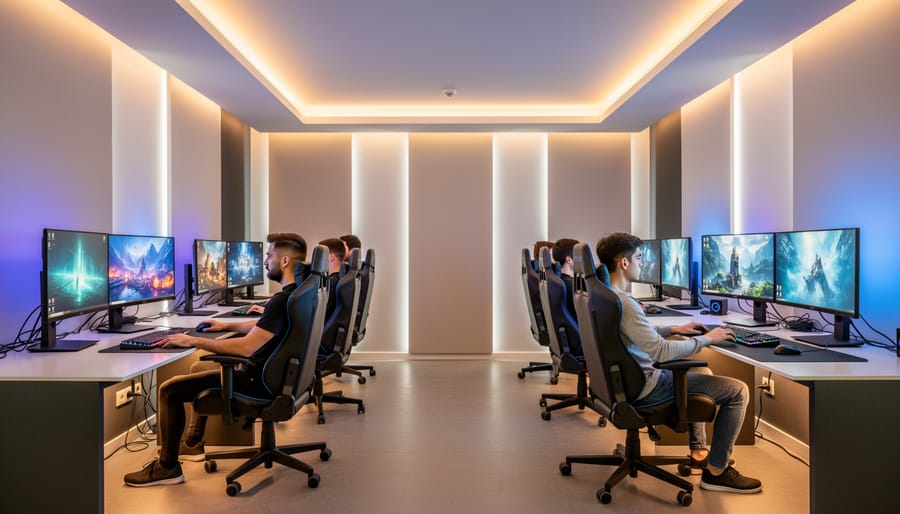
Lighting That Works for Extended Screen Time
Getting the lighting right is absolutely essential when you’re designing a space where people will be staring at screens for hours. The good news? You don’t need fancy solutions—just smart, layered approaches that protect your guests’ eyes and keep the energy comfortable.
Start with the biggest culprit: overhead lighting. Harsh ceiling lights create glare on screens and cause eye strain fast. Instead, think about installing dimmer switches on all your main fixtures. This simple upgrade gives you complete control throughout the day, letting you adjust brightness based on natural light and time of day.
Indirect lighting is your best friend here. Position floor lamps or wall sconces so they bounce light off walls and ceilings rather than shining directly into the space. This creates a softer, more diffused glow that reduces screen glare dramatically while maintaining enough brightness for comfortable movement around the room.
Layer your lighting with three levels: ambient (your general room light), task (individual reading or desk lamps for non-gaming activities), and accent (LED strips behind screens or under shelving). This approach gives depth to your space while preventing that flat, tired feeling that comes from single-source lighting.
Consider warmer color temperatures (2700K-3000K) rather than cool blues, which can increase eye fatigue. Your guests will appreciate the difference during those marathon gaming sessions.
Colors That Energize Without Overwhelming
Color sets the emotional foundation of your gaming lounge, influencing how long guests stay and how comfortable they feel. The key is finding that sweet spot between energizing and overwhelming—you want players engaged but relaxed enough to enjoy their experience.
Deep jewel tones like emerald green, sapphire blue, and rich burgundy create sophisticated ambiance without the aggressive energy of bright reds or neon colors. These colors feel upscale and adult-oriented, perfect for creating calming environments where concentration matters. Consider using them as accent walls or in your upholstery choices.
Neutral bases—charcoal gray, warm taupe, or navy—provide visual rest between gaming stations while maintaining that polished look. These anchoring colors prevent sensory overload, especially important in spaces with multiple screens and digital displays.
Metallic accents in gold, copper, or brushed brass add touches of luxury without requiring expensive renovations. Use them sparingly in light fixtures, trim details, or decorative elements to elevate the overall aesthetic.
Avoid stark white walls that create glare from screens, and skip bright yellows or oranges that can increase anxiety. Your color palette should whisper sophistication rather than shout for attention, creating a space where guests naturally want to settle in and stay awhile.
Furniture and Layout: Comfort Meets Functionality
Seating That Keeps Players Comfortable for Hours
Let’s talk about one of the most crucial investments for your gaming lounge: the seating. Think about it – your players could be settling in for hours at a time, and uncomfortable chairs are the fastest way to send them home early.
For gaming lounges, ergonomic office chairs are your best friend. Look for models with adjustable lumbar support, armrests, and seat height. The key features you’ll want include breathable mesh backs to prevent overheating during long sessions, and sturdy five-wheel bases for stability. Racing-style gaming chairs have become incredibly popular too, offering that immersive feel while delivering solid back support.
Here’s a practical tip: choose chairs with easy-to-clean materials. Gaming lounges see lots of traffic, so leather or high-quality vinyl will wipe down quickly between players. Fabric chairs might look cozy, but they’re magnets for spills and stains that’ll become maintenance headaches.
Don’t forget about creating variety in your space. While most players will use your main gaming stations, consider adding a few lounge-style recliners or even comfortable bar-height seating near social areas. This gives players options to relax between sessions or socialize with friends.
Budget-conscious? You don’t need to splurge on premium brands for every seat. Mix a few high-end chairs at your most popular stations with solid mid-range options elsewhere. Just make sure everything meets basic ergonomic standards – your players’ comfort directly impacts how long they’ll stay and how often they’ll return.

Smart Layout Strategies for Different Business Sizes
Whether you’re working with a cozy corner space or a sprawling venue, smart layout planning makes all the difference in creating a gaming lounge that feels just right.
For smaller spaces (under 1,000 square feet), think quality over quantity. Instead of cramming in too many stations, focus on creating 4-6 premium gaming spots with generous personal space around each one. Consider booth-style seating along walls to maximize privacy while keeping pathways clear. This intimate setup actually works beautifully for building a loyal community of regulars who appreciate the exclusive feel.
Mid-sized lounges (1,000-2,500 square feet) give you flexibility to balance social and private gaming experiences. Create distinct zones using partial dividers, plants, or strategic furniture placement rather than permanent walls. You might dedicate one area for social gaming with communal seating and another for focused players who prefer solitude. This zoning approach lets you cater to different playing styles without making anyone feel cramped or exposed.
Larger facilities (2,500+ square feet) benefit from a hub-and-spoke layout. Position your main amenities like refreshment stations and restrooms centrally, with gaming zones radiating outward. This keeps foot traffic flowing smoothly without disturbing concentrated players. Include a mix of open-concept social areas and semi-private nooks to appeal to various preferences.
Pro tip for any size: Always leave at least 4-5 feet between gaming stations and main walkways. Your guests need comfortable circulation space, and you’ll appreciate easier maintenance access too!
Technology Integration Without the Clutter
Let’s talk about keeping your gaming lounge looking sleek while handling all that essential technology. We know wires, cables, and equipment can quickly turn a beautiful space into a tangled mess, but with some smart planning, you can have the tech you need without the clutter.
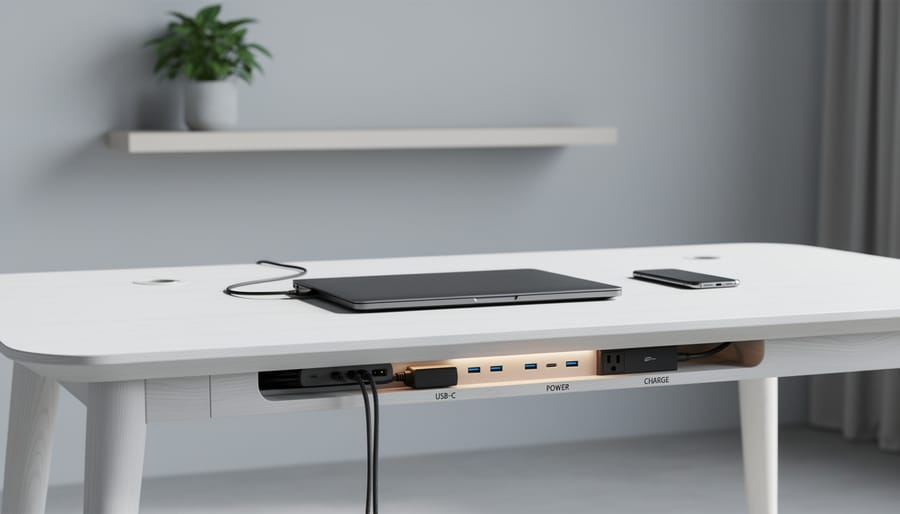
Start with cable management systems that work behind the scenes. Cable raceways that mount along walls or under counters are your best friends here. They come in various colors and finishes, so you can match them to your décor rather than having them stick out awkwardly. For gaming stations, consider desks or tables with built-in cable management channels. These let you route power cords, charging cables, and internet connections neatly underneath, keeping surfaces clean and inviting.
WiFi boosters and network equipment don’t need to sit on display. Install them inside cabinets with ventilated doors, or mount them on wall-mounted shelving units that incorporate storage. If you’re installing new equipment, work with an electrician to create hidden power outlets at strategic locations. This prevents extension cords from snaking across your beautiful flooring and creating trip hazards for your customers.
Charging stations deserve special attention since they’re essential for today’s guests. Look for furniture pieces with integrated USB ports and wireless charging pads built right into tabletops or armrests. This gives your customers the convenience they expect without cluttering surfaces with charging bricks and cables. For wall-mounted charging areas, consider decorative panels or frames that incorporate the charging ports as part of the design rather than afterthoughts.
Device mounting for screens or tablets can be handled with slim, adjustable arms that tuck close to walls when not in use. Choose finishes that complement your overall aesthetic, whether that’s matte black for modern spaces or brushed metal for industrial vibes. The key is making technology feel intentional and integrated, not hastily added as an afterthought to your thoughtfully designed gaming lounge.
Sound Design: The Element Most People Forget
Here’s something most people overlook when designing their gaming lounge, but trust me, it makes all the difference: sound. You might have the perfect lighting and comfortable seating, but if your audio environment isn’t right, players won’t stick around as long as they could.
Think about it like this. Walk into any successful casino or entertainment venue, and you’ll notice they’ve mastered the art of audio atmosphere. The same principles apply to your gaming lounge, just on a more accessible scale.
Start with your background music selection. You want something that energizes without overwhelming. Upbeat instrumental tracks or low-key electronic music work wonderfully because they create excitement without competing with game sounds. Keep the volume at conversation level, around 60-70 decibels. If people need to raise their voices, it’s too loud.
Now, here’s where things get practical. Echo can ruin even the best music playlist. Hard surfaces like tile floors, glass, and bare walls bounce sound around, creating that uncomfortable cafeteria feeling. Combat this with sound-absorbing materials. Fabric wall panels, area rugs, upholstered furniture, and even strategically placed plants all help soften acoustics naturally and affordably.
Consider creating distinct audio zones too. Your main gaming area might have more energetic background music, while a lounge or refreshment area could feature something calmer. This gives players mental breaks without leaving your space.
The impact on player experience is real. Comfortable sound levels reduce stress and fatigue, which means longer visits and happier customers. Plus, when you get the acoustics right, conversation flows easier, creating that welcoming community atmosphere that keeps people coming back.
Budget-Friendly Ways to Elevate Your Gaming Space
Creating an impressive gaming lounge doesn’t require breaking the bank! Let’s explore some budget-savvy approaches that deliver maximum impact without the hefty price tag.
Start with strategic accent walls to transform your space instantly. A single feature wall with peel-and-stick wallpaper or a bold paint color can dramatically shift the atmosphere. Think deep blues, rich purples, or even a sophisticated charcoal gray that sets a premium gaming mood. These options are renter-friendly and won’t cost more than $50-100 for an entire wall.
Lighting is your secret weapon for affordable transformation. Swap out standard bulbs for smart LED strips that you can control from your phone. These typically cost under $30 and let you adjust colors and brightness to match different gaming sessions. Add a couple of inexpensive floor lamps from discount retailers, and suddenly your space feels professionally designed.
Consider a phased approach to your lounge makeover. Month one might focus on lighting and paint. Month two could tackle comfortable seating through secondhand finds or budget-friendly gaming chairs. This spreads costs while letting you refine your vision as you go. It’s perfectly okay to build your dream space gradually!
Don’t underestimate DIY solutions for personalizing your area. Cable management boxes keep technology looking tidy for minimal investment. Floating shelves from hardware stores provide display space for gaming memorabilia or plants that soften the tech-heavy environment. Through thoughtful space styling, even budget pieces come together cohesively.
Remember, great design isn’t about spending the most money—it’s about making intentional choices that reflect your gaming lounge’s unique personality. Start small, focus on high-impact changes first, and build from there. Your perfect gaming retreat is absolutely achievable, regardless of your starting budget!
Creating a successful online casino gaming lounge isn’t just about aesthetics—it’s about crafting an experience that keeps customers coming back. When you bring together thoughtful lighting, comfortable furniture, cutting-edge technology, and carefully managed acoustics, you’re not just decorating a space. You’re investing in your business growth and building a welcoming environment where people genuinely want to spend time.
The beauty of these design principles is that they work together harmoniously. Your atmospheric lighting enhances the gaming experience, your ergonomic seating keeps customers comfortable during extended play sessions, and your sound management creates that perfect balance between energy and focus. Each element supports the others to create something truly special.
Remember, you don’t need to implement everything at once or break the bank to see results. Start with the fundamentals that matter most to your customers, then build from there. Even small improvements can make a noticeable difference in how people perceive and enjoy your space.
If you’re feeling overwhelmed by where to begin or how to pull all these elements together cohesively, that’s completely normal. Professional design consultation can be a game-changer, helping you avoid costly mistakes and create a space that truly reflects your vision. A fresh set of expert eyes can spot opportunities you might miss and offer innovative solutions tailored specifically to your budget and goals. Your gaming lounge deserves thoughtful design—and your customers will absolutely notice the difference.